Kenji Yamase is 54. He spends his days in his bedroom in Japan, as he has for most of his adult life. In the next room is his mother, who is 88.
What he told an Al Jazeera documentary crew is not what most people expect a man in his situation to say. He described the feeling as a sense that you should not be here — that even when you are present, you are not really yourself. And he talked about his mother: that he can feel her getting frailer each year, that he worries about her, that he does not know what to do, and that he feels sad when he thinks about her being gone.
That is not laziness. It is not a phone problem. It is a man who has been trapped for thirty years and is frightened about what happens when the person keeping him alive dies.
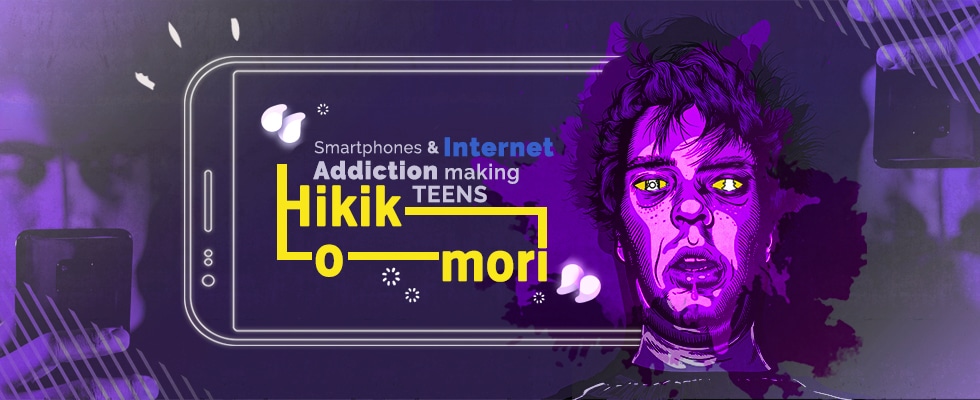
Hikikomori — prolonged social withdrawal lasting six months or more — is usually written about in English as a curiosity from Japan, or as a warning about screens. It is neither. It affects an estimated 1.46 million people in Japan, around 867,000 in Italy, and an unknown but almost certainly large number in Britain and the United States. This guide covers what it actually is, what causes it, what families and governments have learned, and what the evidence says helps.
What is hikikomori?
The term translates roughly as “pulling inward.” It entered public consciousness in 1998, when Japanese psychiatrist Tamaki Saitō published a book on social withdrawal that set off a national argument about how many young people were living behind closed bedroom doors. The word entered the Oxford English Dictionary in 2010.
International criteria developed in 2017 set three conditions: marked social withdrawal with seclusion at home; continuous social isolation for at least six months; and significant functional impairment or distress.
Japan’s Cabinet Office uses a broader definition covering people who go out only to a convenience store, people who leave their room but not the house, and people who rarely leave their room at all. Psychiatric criteria developed by Kato and colleagues distinguish pathological from non-pathological withdrawal.
These definitions are not interchangeable, and it matters. A 2025 University of Tsukuba study published in Psychiatry and Clinical Neurosciences compared them across residents of Kasama City and found the populations they captured had little overlap. The researchers warned against comparing figures carelessly — and against overmedicalising the condition.
Hikikomori is not a DSM-5 diagnosis. Saitō’s own argument was that it produces a cluster of symptoms that does not map neatly onto any single existing condition — which is exactly why assessment matters more than the label.
How many people live like this in Europe and the US?
For years this was filed as a culture-bound Japanese syndrome. It is not. Cases are documented in Italy, Spain, France, the UK, the US, Canada, Australia, Brazil, India, Oman and Ukraine.
Europe
A secondary analysis of the European Social Survey across 29 European countries put severe social isolation at roughly 1.71% — strikingly close to Japan’s 2%.
Italy has the best national data. Researchers analysed the 2019 European Health Interview Survey — a nationally representative sample of 45,962 people aged 15 and over — using difficulty going out unrelated to illness or disability as a proxy. They found hikikomori risk at 1.7% (95% CI 1.6–1.9): 866,743 people.
Among Italian adolescents, around 1.7% were classified as hikikomori with another 2.6% at risk. And comparing nationally representative student surveys from 2019 and 2022, the group of teenagers who never meet their friends had doubled after the pandemic.
In Spain, 12.6% of people already affected by social withdrawal met hikikomori criteria. In France, a study comparing French and Japanese adolescents found parent-child communication problems were a significant predictor in the French sample.
The United States
No nationally representative US estimate exists. American clinicians see these cases and US researchers helped build the assessment tools now used internationally, but nobody has run the equivalent of Japan’s Cabinet Office survey.
The absence is itself revealing. It isn’t measured because it isn’t a recognised category — cases get logged as depression, social anxiety, school refusal or “failure to launch.” American and British families meet this situation without a name for it and without a service built around it.
If European rates near 1.7% are indicative, the implied US figure runs into the millions. That is extrapolation, not measurement. But absence of data is not absence of people.
What it feels like from the inside
The stereotype is a sullen teenager who cannot be bothered. The accounts of people actually living it describe something closer to paralysis.
Kenji’s description — that you feel you shouldn’t be there, that you aren’t yourself even when present — is a description of shame and dissociation, not indifference. In the document South Korea published alongside its youth support programme, one young person explained that their seclusion began at fifteen, after domestic violence left them so depressed they mostly slept, waking to eat and returning to bed.
This matters for how a parent reads the situation. Someone who has withdrawn is not usually enjoying it, and is very often acutely aware of the damage. Approaching them as though the problem is unwillingness will land badly, because the person on the other side of the door has typically been failing to talk themselves out of that room for a long time already.
What actually causes hikikomori
This is where most articles go wrong, and the wrong answer sends families in the wrong direction.
Japan’s Cabinet Office surveyed 30,000 people and asked those in withdrawal why it began. For 15-to-39-year-olds the leading answer was difficulty with interpersonal relationships (20.8%), then the pandemic (18.1%). For 40-to-64-year-olds it was leaving employment (44.5%), with the pandemic second at 20.6%.
South Korea’s Ministry of Gender Equality and Family, reporting on its own population, listed: personal trauma, bullying, academic stress, family conflict, and lack of care from parents or guardians.
Two governments. Two countries. Two independent datasets. Smartphones appear in neither.
Clinically, hikikomori is commonly comorbid with depression, social anxiety disorder and suicidal thinking. School refusal, bullying, academic pressure and job loss recur throughout the literature. Withdrawal is a response to something painful.
The smartphone question, answered honestly
The counter-evidence deserves stating rather than skipping. In a clinical study of Italian adolescents with hikikomori, over half exceeded the cut-off on the Internet Addiction Test and 42.4% met criteria for Internet Gaming Disorder. Research on non-working adults found people in the early months of pathological withdrawal showed elevated rates of gaming disorder and depression.
Heavy screen use among withdrawn young people is real. What that evidence cannot establish is direction.
If a young person has stopped leaving their room, the screen is what is left — the only channel to other people, and often the only thing making the day survivable. Removing it does not address why they stopped leaving. It removes their last social contact.
A parent who concludes “the phone did this” confiscates the phone. A parent who understands the phone is a symptom starts asking what made school or work unbearable. That is usually where the answer is.
What this looks like in real families
One of the first cases to reach Western audiences was reported by the BBC in 2002 and has been cited in the academic literature ever since. A Japanese mother, Yoshiko, described how her seventeen-year-old son was targeted at school with anonymous hate letters and graffiti about him in the schoolyard. Afterwards he shut himself in the family kitchen and did not come out. The family eventually built a second kitchen so they could carry on around him. She left meals at his door three times a day, for years.
The trigger was bullying. Everything after it — the closed door, the screens, the years — was aftermath.
The pattern isn’t confined to Japan. On the National Autistic Society’s UK forum, a British parent asked how to reach an adult son who had withdrawn and cut off every friendship. The striking thing in that thread isn’t the son’s situation — it’s the mother’s frustration at finding endless material describing hikikomori and almost nothing telling her what to do. Other parents raised the possibility of undiagnosed autism, a recurring theme, since autistic young people in unaccommodating environments are over-represented in withdrawal.
Three countries, three families. No phones in any of the accounts. Bullying, violence at home, and unrecognised neurodevelopmental difference instead.
There is one more thing these families share, and it shapes the statistics: shame. Many parents never tell anyone. Support organisations consistently report that families conceal the situation for years, which means every prevalence figure in this article is probably an undercount.
The 8050 problem
Japan has a name for what Kenji Yamase is living through, and it is the most alarming thing in this subject.
The 8050 problem describes parents in their eighties still housing, feeding and financially supporting children in their fifties. Japan’s 2022 survey found withdrawal rates were essentially identical across age groups — 2.05% of 15-to-39-year-olds and 2.02% of 40-to-64-year-olds. This is not a youth phenomenon that people grow out of. It is a youth phenomenon that ages.
The arithmetic is brutal. When the parents die, a person who has not worked or held a social relationship in three decades inherits no income, frequently no home, and no skills the labour market recognises. Japanese policy has begun addressing this directly, with measures aimed at employment and later-life security for the middle-aged cohort — but for many families the window has closed.
For a parent of a withdrawn fifteen-year-old, this is the argument for acting now rather than waiting for them to grow out of it. The 54-year-olds in that survey were fifteen once too.
The delay problem — and why duration is everything
Only 6.6% of people experiencing hikikomori seek help themselves. In 72.2% of cases a parent or relative makes first contact with a service. The average delay between onset and any support is 4.4 years, running past ten years in roughly 13% of cases.
There is a structural reason rarely explained to parents: because the person will not leave the house, clinicians usually cannot reach them directly. In the early stages support has to be delivered through the family. That is not a judgement about the family. It is simply who is in the building.
And duration appears to be the variable that decides outcomes. Some clinicians have argued that people withdrawn for more than a year may never fully return to work or long-term relationships. Set against that, a clinical follow-up of Italian adolescents found 75% showed improvement in social withdrawal, 67.5% improved significantly on clinical global impression scores, and 55% improved in overall functioning — with the authors concluding that hikikomori improves when identified and treated in good time.
Both findings can be true, and together they say something useful: this responds well to early treatment and poorly to late treatment. The problem is rarely that treatment fails. It is the four years before anyone starts.
What governments are doing
Japan
Japan has the most developed response, built over two decades. The Ministry of Health, Labour and Welfare published guidelines proposing a stepped approach with family support as the first stage. Regional Support Centres for Hikikomori operate nationwide alongside mental health and welfare centres, with social workers at ward level and drop-in “places of belonging” for people in recovery. Legislation now obliges local governments to establish regional councils coordinating the organisations that support isolated people.
South Korea
In April 2023 the Ministry of Gender Equality and Family approved a monthly allowance of 650,000 won (roughly $490) for reclusive young people aged 9 to 24 in below-median-income households, under the Youth Welfare Support Act, alongside education, career coaching and health services. Seoul runs a separate Reclusive Youth Support Project. The Korea Institute for Health and Social Affairs estimates around 350,000 South Koreans aged 19 to 39 — about 3% — are living in isolation.
Europe and the United States
Neither has a hikikomori-specific national programme. Italy has the most active civil-society response, with parent-led associations, but nothing at Japanese or Korean scale. In the UK and US, families end up in general mental health services, school-refusal pathways, or nothing.
For a parent in Manchester or Ohio the practical consequence is that no service is designed around this. The route runs through a family doctor, a school, or a therapist treating the depression or anxiety underneath — which, given the comorbidity data, is often the right route anyway.
Withdrawal, or just a private teenager?
Most quiet, indoorsy adolescents are not experiencing hikikomori. Introversion is not a disorder. The distinguishing features are duration, distress and function:
- Duration. Six months or more of avoided social participation.
- Function. School or work has stopped, not slowed. Friendships have ended, not thinned.
- Distress. Visible unhappiness, anxiety, shame or hopelessness — unlike a contented solitary teenager who simply isn’t very social.
- Direction of travel. The world is shrinking: fewer rooms, fewer people, fewer hours awake in daylight.
No parent can diagnose this from a checklist, and no article substitutes for a clinician. The label also matters far less than what sits underneath it — depression, social anxiety and autism spectrum conditions all present with withdrawal and all have established treatments.
What actually helps
The best-developed family programmes combine Mental Health First Aid and Community Reinforcement and Family Training (CRAFT), the latter built on cognitive behavioural principles. Japanese teams have trialled three- and five-day versions, and the OECD featured the five-day programme in its 2024 Youth Policy Toolkit. Trials are small with mixed results — promising rather than settled — but the components identified as useful transfer directly.
- Active listening. The first skill taught. Not persuading, not problem-solving, not negotiating an exit from the bedroom. Listening in a way that makes talking feel safe.
- Small steps. The core of CRAFT. Not “come to dinner with your grandparents” but “the door stays open while I make tea.”
- Positive communication. Less criticism, blame and ultimatum in daily interaction. The goal is a relationship the person will eventually use.
- Look after the parents. In these trials the most consistent improvement was in the parents’ own mental health. Not trivial — a depleted parent cannot sustain a years-long approach.
- Professional assessment in parallel. One case study documented internet-delivered cognitive therapy for social anxiety working with a client in withdrawal. Therapy that can begin at home matters when leaving the house is the problem.
How slow “slow” actually means
Japan has an unusual intervention that illustrates the pace better than any guideline. Organisations such as New Start train workers — informally called rental sisters or rental brothers — who visit a family home regularly and talk to the withdrawn person, if necessary through a closed bedroom door. Families pay in the region of ¥100,000 a month for a weekly hour-long visit.
According to a photographer who documented the programme at a New Start centre near Tokyo, it typically takes one to two years to coax someone out of their room.
One to two years, of an hour a week, often addressed to a door. That is the realistic timescale, and it explains why the trial literature warns that when a family relationship or the person’s mental health is deteriorating, hasty approaches should be held back. Pace is not a failure of the treatment. It is the treatment.
What makes it worse
- Ultimatums and deadlines. “Out by Monday or else” produces compliance-shaped withdrawal, not recovery.
- Removing the internet as leverage. For someone whose only contact with other people is online, this removes their last social tie.
- Framing it as laziness. Shame drives withdrawal; it doesn’t cure it. Kenji Yamase’s account is what shame sounds like from the inside.
- Keeping it secret from everyone. Understandable, and one of the main reasons the average family waits four years.
- Covert monitoring. Some guidance — including, until recently, an older version of this article — recommends secretly watching a withdrawn young person’s devices. That advice is wrong. Every evidence-based approach here is built on trust and open communication, and secret surveillance is the one thing guaranteed to destroy both if discovered. Isolation is the condition being treated; adding secrecy deepens it. If a family wants visibility into a young person’s day, the young person has to know about it and agree to it.
When to seek help now
Hikikomori is comorbid with depression and suicidal behaviour — in the Italian adolescent sample, 32.5% reported suicidal ideation or behaviour. If a young person is expressing hopelessness, talking about self-harm or death, giving away possessions, or has withdrawn sharply and suddenly, seek professional help immediately rather than working a graduated plan.
In the US, the 988 Suicide & Crisis Lifeline is available by call or text at 988, free and confidential. The Crisis Text Line can be reached by texting HOME to 741741. Elsewhere, Find A Helpline lists services by country.
Otherwise, a family doctor is a reasonable first contact and can refer on to child and adolescent mental health services.
Common questions
How many people have hikikomori outside Japan?
A 29-country European analysis estimated severe social isolation at around 1.71%. Italy’s nationally representative health survey put hikikomori risk at 1.7% — roughly 867,000 people. No nationally representative US estimate exists.
Is hikikomori a mental illness?
Not a standalone DSM-5 diagnosis. It describes prolonged withdrawal that frequently coexists with depression, social anxiety and other conditions. Researchers distinguish pathological from non-pathological withdrawal and caution against overmedicalising it.
Do smartphones cause hikikomori?
The evidence doesn’t support it. When Japan and South Korea asked what triggered withdrawal, the answers were interpersonal difficulty, the pandemic, job loss, bullying, trauma and family conflict. Heavy screen use is common among people already withdrawn, but it reads as a consequence of isolation rather than a cause.
How long does hikikomori last?
Anywhere from months to decades — Japan’s survey found people in their fifties who had been withdrawn since youth. Duration appears to be the key variable in outcomes, which is why the 4.4-year average delay before support matters so much.
Should I force my child out of their room?
No. The research points consistently toward graduated, small-step approaches and away from confrontation, and warns explicitly against pushing when the person’s mental health is deteriorating.
The bottom line
Hikikomori is prolonged social withdrawal, and it is not caused by phones. It is a retreat from something that became unbearable — bullying, violence, academic failure, job loss, or an environment that never accommodated a young person’s differences. It affects roughly 1.46 million people in Japan, around 867,000 in Italy, and an unmeasured number in Britain and America.
Three quarters of treated adolescent cases improve. The obstacle is almost never the treatment — it is the four years before anyone starts, and the shame that keeps families from telling anyone.
Somewhere in Japan an 88-year-old woman is cooking for a 54-year-old son who is afraid of what happens when she is gone. Both of them know. Neither of them knows what to do. Every part of that was preventable thirty years earlier, and the only thing that reliably prevents it is a family that asks for help early, out loud, and without shame.
Sources
- Cabinet Office of Japan, Survey on the Awareness and Lifestyles of Children and Young People, 2022 — summary and analysis
- Tamura et al., “The hikikomori population varies significantly depending on the definition used,” Psychiatry and Clinical Neurosciences, 2025 — doi:10.1111/pcn.13783
- European Health Interview Survey analysis of hikikomori risk in Italy — PubMed
- Hikikomori in Italian adolescents: clinical features and follow-up — PMC
- Nonaka, Shimada & Sakai, family behavioural repertoires and hikikomori, Frontiers in Psychiatry, 2020 — full text
- OECD Youth Policy Toolkit, five-day hikikomori family intervention, 2024 — OECD
- South Korea youth support allowance, 2023 — CNN
- New Start “rental sister” programme — World Economic Forum
- Phil Rees, “Japan: The Missing Million,” BBC Correspondent, 20 October 2002 — BBC News