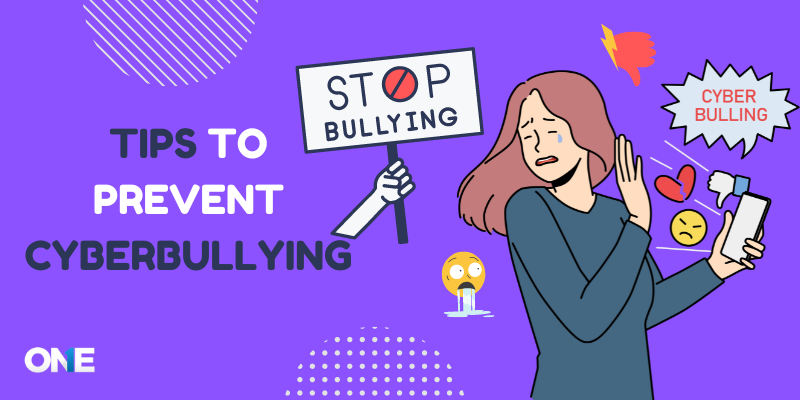
Cyberbullying is the use of phones, apps, games and social platforms to repeatedly harass, threaten, humiliate or exclude another person. Unlike the bullying most parents remember, it doesn’t stop at the school gate — it follows a child home, into their bedroom, onto the device in their hand, at any hour. That constant reach is what makes it so hard to escape, and so easy to miss.
This guide covers what cyberbullying actually looks like in 2026, how to tell whether your child is affected, and what genuinely helps — how to respond if it’s already happening, how to lower the risk, and where to get help. The short version: the single most protective thing isn’t a piece of software, it’s a child who knows they can come to you without losing their phone or their privacy as a consequence.
What Is Cyberbullying?
Cyberbullying is harassment that happens through digital tools — text messages, direct messages, group chats, comments, gaming voice chat, and social media posts. It takes a range of forms, and some are far less visible than others:
- Sending threatening, cruel or repeated unwanted messages
- Posting embarrassing photos, videos or screenshots of someone
- Spreading rumours or lies to damage a reputation
- Impersonating someone to post as them or humiliate them
- Deliberately excluding someone from group chats or online spaces
- Pressuring others to pile on or harass a target
That exclusion category matters more than it first appears. In the Cyberbullying Research Center’s 2025 national study of US teenagers, the single most common form reported wasn’t a hostile message at all — it was being deliberately shut out of a group chat, reported by around one in five students. It’s the hardest kind for a parent to spot, because the harm is an absence — a child left out — rather than anything you’d find by looking at their screen.
How Common Is It, Really?
Cyberbullying is neither universal nor rare — and the honest numbers matter, because both panic and dismissal lead parents to the wrong response.
The Cyberbullying Research Center, which has tracked this since 2016, found in its 2025 survey that 58% of US teens aged 13 to 17 had been cyberbullied at some point, and around a third had experienced it in the previous month. Its long-run data shows a real upward trend over the past decade, not a flat line.
One finding is worth flagging because it overturns a common assumption. For most of the past decade, boys and girls reported cyberbullying at roughly equal rates. The 2025 data shows adolescent boys are now more likely to be targeted (36.6% versus 28.6%), though the type differs — girls more often face rumour-spreading and image-based abuse, boys more often direct threats. If your mental picture of a cyberbullying victim is a teenage girl, it’s worth updating.
Platform matters too. Pew Research Center’s April 2026 report found that roughly three in ten teen Snapchat users had been called offensive names, had rumours spread about them, or been threatened on the platform — noticeably higher than the roughly one in five who reported the same on Instagram or TikTok. Where your child spends their time changes the risk they’re exposed to.
The Impact on Young People
Cyberbullying reaches into three areas of a young person’s life, and the effects can outlast the incident itself.
Mental health
The link between cyberbullying and depression, anxiety, loneliness and low self-esteem is well documented, and in the most serious cases it is associated with suicidal thoughts. If your child discloses cyberbullying and you notice a lasting change in mood, don’t wait it out — this is the point to involve a professional.
Social development
Because the harassment can be public and follows a child across every device, it often produces withdrawal — from friends, from activities, from situations where they might be seen. A child pulling back from the things they used to enjoy is one of the clearest signals something is wrong.
Physical health
Sustained stress shows up in the body. Headaches, disrupted sleep, appetite changes and stomach complaints can all accompany cyberbullying. When there’s no medical explanation for these and they coincide with a change in device behaviour, it’s worth gently connecting the two.
How to Tell If Your Child Is Being Cyberbullied
Cyberbullying usually happens out of a parent’s sight, and children very often don’t report it — from shame, or from a fear that the response will be to take the phone away. So the signs are mostly behavioural. Watch for a pattern rather than a single instance:
- Visible distress, anxiety or anger during or after using their device
- Suddenly turning the screen away, or stopping use of a phone or app they previously lived on
- Withdrawal from friends, family or activities they used to enjoy
- Unexplained mood changes, especially ones that track with going online
- Changes in sleep or appetite with no obvious cause
- Reluctance to go to school, or to talk about what happens online
If you notice several of these, the next step is a conversation — not an interrogation. Let them know you’ve noticed they seem down, that you’re on their side, and that talking to you won’t cost them their phone. That last reassurance does more to open a child up than any monitoring tool, because the fear of losing access is the single most common reason teenagers stay silent.
How to Respond If It’s Already Happening
If your child tells you they’re being cyberbullied, the first minutes of your reaction shape whether they’ll keep telling you things. A few principles hold up well:
- Listen first, and stay calm. Let them describe it in their own words. Reassure them it isn’t their fault and they aren’t in trouble. An overreaction — grabbing the phone, threatening the other child’s parents — usually teaches a teenager not to come to you next time.
- Don’t retaliate, and don’t delete everything. Before blocking, keep evidence: screenshots of messages, posts, usernames, dates. It’s what a school or platform will need to act.
- Block and report through the platform. Every major app has reporting and blocking tools built in. Use them together — reporting flags it for the platform, blocking stops the immediate contact.
- Involve the school if it involves classmates. Most schools have anti-bullying policies that extend to online conduct between students, and they can act in ways an individual parent can’t.
- Escalate when it crosses a line. Threats of violence, sexual harassment, stalking or the sharing of intimate images can be criminal. In those cases, contact the police — and preserve the evidence you kept in step two.
How to Stop Cyberbullying Before It Starts
Prevention isn’t about locking a child out of the internet — that isn’t realistic and it backfires. It’s about building judgement and keeping the channel to you open.
Talk early, and keep talking
The strongest protection is an ongoing, low-drama conversation about online life — not a single serious talk. Children who feel they can mention something uncomfortable without triggering a crackdown are the ones who actually do. Ask what they enjoy, who they talk to, and what they’d do if someone was cruel to them or to a friend.
Teach the basics of a smaller footprint
Help them understand why personal information — full name, school, location, plans — shouldn’t be public, and why private pictures, once sent, are impossible to fully recall. Frame it as control over their own life rather than fear.
Set privacy settings together
Go through the privacy settings on their main platforms with them, not for them. Accounts set so only known contacts can see and message reduce exposure to strangers considerably, and doing it together teaches a skill rather than imposing a rule.
Agree reasonable limits
Sensible boundaries on when and how long devices are used — especially overnight, when a phone in the bedroom extends harassment into the hours a child should be resting — protect sleep and create natural breaks. Agree them together so they hold.
Make bystanders part of the solution
Most young people witness cyberbullying more often than they experience it. Teaching a child not to pile on, to support a targeted friend, and to tell a trusted adult when they see something turns them from a spectator into part of the answer.
Where Parental Controls and Monitoring Fit
Start with what’s free and built in. Google Family Link on Android and Apple Screen Time on iPhone and iPad let you set screen-time limits, restrict content, and manage apps at no cost, and for many families that’s enough. The platforms’ own reporting and blocking tools do the frontline work when something happens.
Beyond those, a monitoring app can give a parent visibility that device-level controls don’t — a fuller view of app activity, messages and browsing in one place, which can surface a problem a withdrawn child hasn’t put into words. That visibility is worth something specifically because so much cyberbullying stays out of sight.
But it comes with a condition this site holds to everywhere: it works best used in the open. A child who knows a tool is there, and knows why, keeps the trust that makes them willing to come to you — which is the thing that actually protects them. A tool kept from them, found out later, tends to destroy exactly that. Monitoring should support the conversation, never stand in for it. TheOneSpy covers Android, iPhone and iPad, Windows and Mac; on iPhone and iPad, Apple’s restrictions mean the visibility available is narrower than on Android, and we’d rather say so upfront.
If Your Child Is in Crisis
Cyberbullying can push a young person into genuine despair, and it’s better to have these numbers and not need them. In the US, the 988 Suicide and Crisis Lifeline is reachable by call or text, and the Crisis Text Line responds to HOME texted to 741741. In the UK, Samaritans is 116 123, and Childline is 0800 1111. findahelpline.com lists free, confidential services by country. If a child is in immediate danger, contact emergency services.
Frequently Asked Questions
What is cyberbullying?
Cyberbullying is the repeated use of digital tools — messaging apps, social media, games — to harass, threaten, humiliate or exclude someone. It includes cruel or threatening messages, spreading rumours, posting embarrassing images, impersonation, and deliberately shutting someone out of online groups. What sets it apart from traditional bullying is that it can happen anytime and follows the target across every device, so there’s no safe space away from it.
How do I stop cyberbullying that’s already happening to my child?
Listen calmly and make clear it isn’t their fault and they won’t lose their phone for telling you. Keep evidence — screenshots, usernames, dates — before blocking, then block and report the accounts through the platform’s own tools. Involve the school if classmates are involved, and contact the police if there are threats, sexual harassment or shared intimate images. Throughout, keep supporting your child emotionally; the harm is as much psychological as practical.
How common is cyberbullying among teenagers?
Common, and rising. The Cyberbullying Research Center’s 2025 study found that around 58% of US teens aged 13 to 17 had been cyberbullied at some point, and roughly a third in the previous month. Its data also shows adolescent boys are now somewhat more likely to be targeted than girls, reversing years of roughly equal rates — though the forms differ, with girls more often facing rumours and image-based abuse.
What are the signs my child is being cyberbullied?
Mostly behavioural, because children often don’t say anything: distress during or after device use, suddenly turning the screen away or abandoning an app they lived on, withdrawal from friends and activities, mood changes that track with going online, and disrupted sleep or appetite. One sign alone rarely means much; several together, sustained over weeks, is the signal to start a gentle conversation.
Should I monitor my child’s phone to prevent cyberbullying?
Monitoring can help a parent spot a problem a child hasn’t voiced, but it works best used in the open rather than concealed. A child who knows a tool is there — and why — keeps the trust that makes them willing to come to you, which is what actually protects them. Start with free built-in controls like Family Link and Screen Time, lead with conversation, and treat any monitoring as support for that relationship rather than a replacement for it.
Sources
- Cyberbullying Research Center — 2025 US cyberbullying data (national survey of teens aged 13–17)
- Pew Research Center — Teens, Social Media and Technology, and platform-level harassment data
- Google Family Link · Apple Screen Time — free device-level parental controls
- Find A Helpline — free, confidential crisis support by country