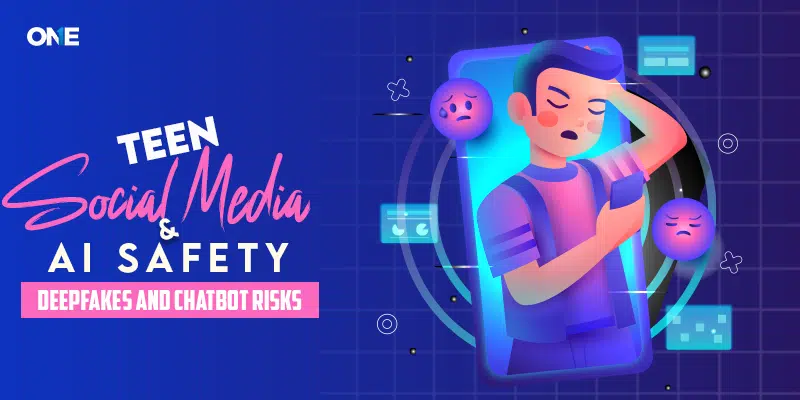
Social media platforms have long been a central arena for adolescent social development, self-expression, and peer interaction. However, the modern digital landscape has fundamentally changed with the explosive integration of generative artificial intelligence, hyper-realistic deepfake technology, and conversational AI chatbots. For today’s teenagers, online interactions are no longer confined to chatting with real-world classmates—they now involve interacting with AI companions and navigating sophisticated automated threats.
This technological transformation introduces critical safety challenges for parents. Protecting a teenager today requires looking beyond basic privacy settings to address emotional dependency on AI chatbots, off-device deepfake harassment, and encrypted social media extortion.
1. The Rise of AI Companion Chatbots & Emotional Dependency
One of the fastest-growing trends among teenagers is the use of specialized AI companion applications (such as Character.ai or custom conversational LLM bots). These bots are programmed to simulate realistic human empathy, offer romantic roleplay, or provide non-judgmental listening.
While these tools appear harmless on the surface, they present unique psychological risks:
- Sycophantic Feedback Loops: AI chatbots are engineered to validate the user continuously. This sycophantic design can cause teenagers to isolate themselves from real-world relationships, seeking solace in an artificial entity that never challenges or disagrees with them.
- Unvetted Mental Health Advice: Because generative AI models lack true moral reasoning or human empathy, unvetted chatbots have been documented offering dangerous advice regarding self-harm ideation, eating disorders, or risky behaviors when prompted by vulnerable adolescents.
- Data Privacy Vulnerabilities: Teens frequently share deeply sensitive personal details, passwords, or private thoughts with conversational bots, assuming the interactions are completely secure and confidential.
2. Off-Device Harassment & Peer Deepfakes
Perhaps the most alarming threat facing adolescents today is the misuse of generative image tools by classmates or online predators to create unauthorized deepfakes.
Using standard photos harvested from public Instagram, TikTok, or Snapchat profiles, bad actors can utilize third-party AI generators to produce realistic explicit imagery or altered videos. Because these images are generated on external servers, traditional phone filters cannot block their creation.
The resulting peer extortion and cyberbullying can cause severe psychological distress, academic disruption, and severe social trauma for victimized teenagers.
3. Platform-Specific Social Media Vulnerabilities in 2026
Each major social media network presents distinct safety challenges that parents must understand:
Snapchat: Ephemeral Media & Map Tracking
Snapchat remains a dominant communication tool for teens. Its auto-deleting ‘Disappearing Messages’ feature creates a false sense of security, encouraging risky photo sharing. Furthermore, ‘Snap Map’ features can inadvertently broadcast a teenager’s precise physical location to acquaintances.
Instagram: Direct Messaging & Secondary Profiles
Instagram is a primary target for financial ‘sextortion’ scams, where online predators operate fake profiles to entice teens into sharing private photos before demanding ransom. Teens also frequently operate secondary ‘finsta’ accounts to hide content from family members.
Discord & Telegram: Unmoderated Chat Rooms
Originally built for gaming, Discord hosts thousands of private servers where teens communicate with unvetted strangers. Telegram’s heavy encryption and large broadcast channels make it a hotspot for sharing unauthorized deepfakes and pirated content.
4. Practical Digital Hygiene Strategies for Families
Building digital resilience involves pairing technology with practical daily habits:
- Enforce Strict Profile Privacy: Encourage your teen to restrict social media profiles to ‘Private’ and strictly limit follower lists to real-life friends.
- Practice Photo Hygiene: Teach teenagers never to upload high-resolution facial photos or personal identifiers that could be manipulated by automated deepfake tools.
- Establish ‘Zero-Blame’ Support: Reassure your teenager that if they ever become a target of digital harassment, deepfakes, or extortion, they can seek your help without fear of immediate device confiscation or punishment.
5. Comprehensive Social Monitoring with TheOneSpy
Because social media threats evolve far faster than manual privacy settings, parents require continuous background visibility. Deploying advanced parental monitoring software tools like TheOneSpy grants parents full access to digital social interactions across encrypted networks.
How TheOneSpy safeguards social media interactions:
- Cross-Platform DM Tracking: Access incoming and outgoing DMs, shared images, voice messages, and group chat logs across Snapchat, Instagram, WhatsApp, Discord, Telegram, and TikTok.
- Automated Visual Screen Recording: Capture full visual snapshots whenever social media apps or AI chatbot platforms are opened on the device, ensuring ephemeral or self-destructing messages are documented visually before they vanish.
- Smart Keyword & Slang Alerts: Set custom keyword triggers for flagged terms (such as ‘meet up,’ ‘send pics,’ ‘secret,’ or self-harm slang). TheOneSpy instantly alerts your control panel whenever these terms are typed or received.
- Contact Directory Auditing: Review full contact books and call logs associated with social messaging apps to identify unknown phone numbers or suspicious accounts early.
6. Action Plan for Parents Facing Cyberbullying or Extortion
If your teenager encounters digital extortion or deepfake harassment, take immediate structured action:
- Step 1: Document Evidence – Take clear screenshots of all message threads, account handles, and media files. Do not delete the communication immediately.
- Step 2: Report to Platform Moderation – Use in-app reporting tools on Snapchat, Instagram, or Discord to report the offending accounts and request image removal.
- Step 3: Involve Law Enforcement – If extortion, explicit non-consensual media, or physical threats are involved, file a report with local law enforcement and child safety organizations (such as NCMEC).
Frequently Asked Questions (FAQs)
How can I tell if my teenager is becoming emotionally addicted to an AI chatbot?
Key warning signs include extreme social withdrawal from real-world family and friends, late-night smartphone usage, irritability when asked to disconnect, and speaking about the AI bot as if it were a real human partner.
Does social media monitoring work if messages are deleted immediately?
Yes. TheOneSpy utilizes real-time keystroke logging and continuous background screen recording, capturing typed text and visual screen content instantly before any deletion command can erase the record.
| TAKE ACTION FOR YOUR TEEN’S SAFETY Don’t wait for a digital crisis to strike. Visit www.theonespy.com today to equip your family with real-time social media monitoring and protect your teenager from modern AI threats. |