
In this hyperactive world, where everything is just a click away, the social world is like a second home for kids. Although AI brings so much ease to daily routines, kids enjoy sharing, creating, and exploring ways to express themselves. But alongside these great advancements, there is a darker side, and it should be even worse in parents’ relationships. Cyberbullying, voice & face cloning, deepfakes, online abuse, and anonymous conversations and app lurking outside in immense numbers, targeting kids every day.
What makes the AI even more horrifying is that it is no longer isolated or part of rare accidents. Recent studies by global online safety reveal it’s more common and part of daily routines, just as we spend casual days. It is highly disturbing that the number is increasing day by day and has a huge impact on mental and physical well-being, especially in underage users. Now parents feel helpless and start overreacting, but this concern is rising fast and in true numbers.
Evolving Online Risks for Kids
Cyberbullying and online threats are among the top concerns of parents due to the world moving fast and adopting digital assets heavily. It’s not just first-day ragging that’s happening on the first day of school or college, but it is now beyond that. Now harassers have shifted online, where bullies create group chats, share fake pictures and videos to humiliate kids. These become the norm, where kids publicly manipulate, and the unfortunate part is that no one can fight back, and if someone is there, there is no clear evidence. Studies asserted that 43% of the kids face cyberbullying that is caused by AI deepfakes, and this number is drastically growing every day. Plus, the situation is even more disturbing when it comes to girls, where teenagers and half of the teenage girls aged 13 to 15 reported being targeted online. This creates a negative environment where kids don’t feel secure and see the world around them in a totally different way, which, of course, is negative!
The AI inventions make things even scarier. Now the manipulator can use AI tools to create photos, videos, and voice notes that look exactly like how kids do in real life. Estimatively, 1 in 5 children are exposed to AI-generated content, and for girls, it is more terrifying, increasing the risks up to 38%. Imagine that someone shared the fake image or video in the school group chats to humiliate kids personally and make them feel embarrassed. Unfortunately, this is not just based on stories anymore; now it’s happening in reality, the world where we live.
The other most trendy threat is an anonymous chat platform. These open platforms, where anyone masks their personal specifications, carpers, manipulators, see a hub where they can groom, harass, or bully anyone without fear of exposure. Countless kids complain about receiving inappropriate messages from unknown users, who can be part of grooming groups or pass out emotional manipulations, the easiest way to hide real faces, but continue their work. Studies reveal that nearly 28% of families are dealing with inappropriate or harassment and stranger connections. Still, it might be higher as some families and kids were not stated at all.
The Confidence Gap – Why Parents Feel Devastated
The hardest part that keeps these alarming trends growing is the lack of communication between parents and kids about the sensible use of technology. Nearly 48% of parents say their children know more about technology than they do, and only around 34% are confident that their child can tell what is real or fake on the internet. These uncertainty conditions develop a feeling of fear and confusion where parents want to keep kids safe from online bullying, but have no understanding of the dangers and are not aware of it before it’s too late.
Despite that, nowadays parents are the busiest and are not able to constantly check their kids’ devices. But when kids grow up, they need independence and freedom to have their own private space. But as the online world evolved quickly, it would be difficult to leave kids alone with their devices. The manipulators and harassers are on the edges and can target your kids at any time. These are deeply concerning issues, and parents want to escape them; they need a tool that gives them ease and free time, keeps their kids safe, and maintains their independence.
How These Threats Affect Real Life
These dangers don’t end when the screens turn off, but the side effects can show up in real life. Parents often do not recognise it because they do not recognise online risks. A child who is exposed to cyberbullying can experience long-term mental health problems that cause fear and anxiety that can last long after they grow up. Youngsters who are more prone to screens or switching between different apps can develop major physical and mental health issues and are likely to cut themselves off from others with mood swings, lower self-esteem, and no motivation.
Over time, some of these kids shut down, pull back from friends, avoid social situations, and lose interest in things they used to love. They can start to struggle at school, experience changes in their sleep and mental health that can begin deteriorating.” What’s more terrifying is that many kids aren’t talking about it. They conceal their pain to avoid embarrassment or to avoid getting in trouble.
How These Threats Affect Real Life
There are several non-reported cases out there where kids do not report online bullying or are caught by AI manipulative content. They might feel embarrassed and concerned that they could be judged if they share information with adults. So, the problem becomes even worse if it is not addressed instantly with proper guidance.
On the other hand, bullies have become more sophisticated and secretive. Numerous apps incorporate AI techniques; they hide their true faces and show the cruellest sides to kids, and continue to do so without fear of detection. They continue to remain secretive, sharing inappropriate material with fake identities, and continue bullying kids, and parents feel worried.
AI Deep Fake and Cyberbullying Prevention & Safety Tips for Parents:
The digital world has shifted instantly nowadays. Safety has become a necessary part. But to gain safer digital interactions, parents can use these useful tips:
- Acknowledge kids’ understanding of Deepfakes or AI damages:
Teach kids several apps that create fake images, videos, and voice clones that look exactly real, but you have to recognise whether it’s actually realistic or contains suspicious material. - Conduct non-judgmental conversations:
Openly discuss which types of online activities kids prefer, and gently teach them without punishment. - Monitor Mood Changes And Sleep Schedules:
Terrifying behaviour, sudden mood shifts, or insufficient sleep can indicate that kids may have seen online. - Monitor Secret Or Unknown Messaging Applications:
Check the apps that kids use most on their devices. Keep a keen eye on every app, including those that support built-in disparagement or anonymous content. - Enable Alert and Tracking Features:
You can use a renowned AI chatbots tracker, which helps take screenshots, record real-time conversations, and track dubious activities, so no external interference occurs.
 Artificial intelligence risks growing with the new advancements. Parents need to be hyper-vigilant to protect kids from AI-generated, manipulative Deepfake content. But with the knowledge and guidance of open conversation, parents successfully safeguard kids from concentrated digital harm.
Why Basic Safety Measures No Longer Sufficient
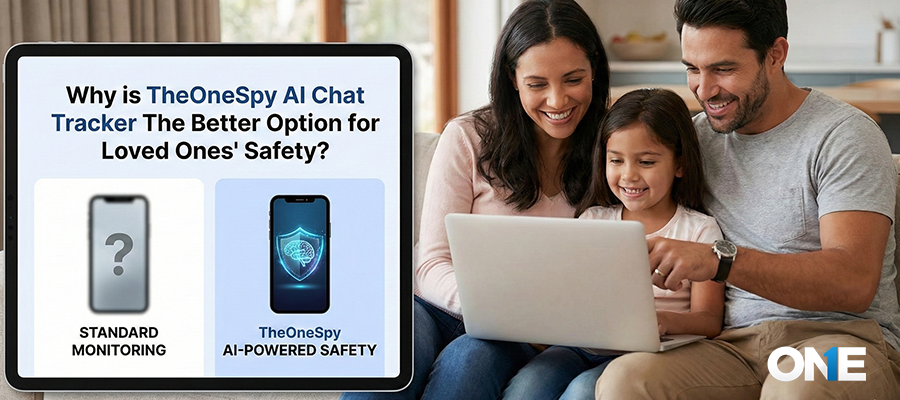
Why is TheOneSpy AI Chat Tracker The Better Option for Loved Ones’ Safety?
TheOneSpy provided undivided, uninterrupted monitoring of widely known AI chatbots, as well as shared AI-generated content by others, including deepfake images and repeated content, via public chatbots. With real-time screen recording, you can use TheOneSpy, an open chatbot tracker, to record the live screen visuals and the type of prompt a targeted person adds to get the answer, reveal their personal details (date) on OpenBot, or send images and videos to generate AI-generated content. Anything going on the kids’ page, the AI chatbot tracking feature will be able to see and show you on your screens as evidence. So even if kids delete the AI chat history, the video shots are still saved to the dashboard.
It is a good apps that provide us with clean visibility with minute comfort parents, so no parent can just make a guess and send their children out there, even if they are bullied, harassed, or groomed online. They are obviously watching what is going on and could look at chats later, even if they have been deleted in incognito tabs.
Why is TheOneSpy the Best Choice for Users?
Now, AI methods are the most affordable and accessible to all. This may result in attackers, groomers, or persecutors utilising the tools to produce deepfake images, voice clones, and anonymous abusive messages while hiding their own identities. At large technology companies, they collect even more of our family to monitor and manipulate, continuing their further meddling with our lawful liberties.
Here is what TheOneSpy comes to lighten the dark part of the online world. When you feel stuck and confused, TheOneSpy provides a clear, explanatory report on your screen. So you will not miss the important conversation on the OpenAI platform. Plus, it can terminate the mature or unsuitable searches that kids face and are bullied or harassed, but do not express their feelings because of feelings of embarrassment and fear. TheOneSpy provides full control and the necessary responsibilities in this unpredictable world.
Final Words
The digital world offers tremendous advantages, but it also carries side effects that are harsh to kids’ lives. The space is not safe for kids to navigate freely. The concept of cyberbullying, deepfakes, AI manipulative or anonymous messages are not in stories now; they are happening in real life.
So, to be extra prudent, TheOneSpy AI chatbot tracker is for you. Not just a simple app, but one that offers convenience and modern methods. Helping parents detect danger early and respond instantly so no kids are victims of bullying, deepfakes, or grooming, when parents rely on TheOneSpy, this protects what matters most: Kids’ safety!