Ask a parent what worries them about their teenager’s phone and the answer is rarely one thing. It’s the hours that vanish into it, the comparison to everyone else’s highlight reel, the pressure to look a certain way, and the sense that something about their child’s mood now rises and falls with a screen. Those worries are reasonable, and the research broadly supports them — social media does affect teenagers’ wellbeing, in ways worth understanding rather than panicking about.
This guide walks through what the evidence actually says about how social media affects teens — self-esteem, body image, sleep, attention, and the particular pressure of a life lived through selfies and likes — and what a parent can practically do. The theme throughout: the goal isn’t to remove social media, which isn’t realistic, but to help a young person build a healthier relationship with it.
How Social Media Affects Teenagers
Adolescence is a period of rapid identity formation, heightened sensitivity to peers, and a strong pull toward validation — which is exactly what makes it the stage where social media lands hardest. The effects aren’t uniform; some teenagers sail through largely unaffected while others are highly vulnerable, and a lot depends on how they use it rather than simply how much. But several patterns show up consistently in the research.
Self-esteem and social comparison
The most consistent finding across the literature is that appearance-focused social comparison lowers self-esteem. Teenagers scroll through endless curated, edited, filtered images and measure themselves against a standard that isn’t real — and often isn’t even achievable, because it was manufactured. Reviews of adolescent studies repeatedly link frequent use of image-heavy platforms to reduced self-esteem and heightened anxiety, with the comparison behaviour itself being the mechanism that does the damage.
Body image and appearance pressure
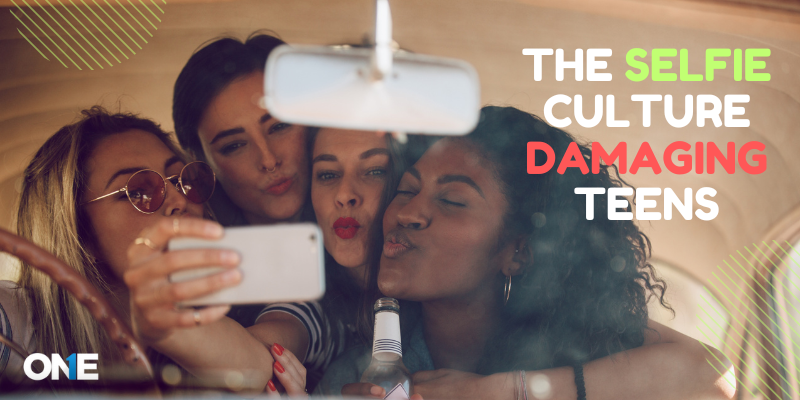
This is where the “selfie” side of social media bites hardest. Platforms built around images — and around likes as a scoreboard — push teenagers toward an intense focus on how they look. A 2025 comprehensive review of adolescent body image found a strong, consistent link between frequent social media use and body dissatisfaction, affecting both boys and girls, and associated with a heightened drive toward unrealistic ideals. Editing tools make it worse: when a teenager can smooth, slim and reshape their own photos in seconds, the gap between the edited self and the real one becomes its own source of distress.
The practical concern for a parent isn’t a single selfie. It’s a teenager whose sense of worth has quietly attached itself to the response a photo gets — and who may start editing not just images but behaviour to chase it.
Sleep
Phones in bedrooms, notifications after lights-out, and the pull to check one more time all cut into sleep — and disrupted sleep feeds straight back into mood, concentration and resilience. Of all the effects here, this is the one with the clearest cause and the simplest fix, which is why it’s worth tackling first.
Attention and time
Feeds are engineered to hold attention, and time on them displaces other things — homework, hobbies, in-person friendship, rest. The issue usually isn’t any single app but the sheer share of a teenager’s waking hours it can absorb if nothing checks it.
It Isn’t All Harm
An honest account has to say this: social media isn’t uniformly bad for teenagers, and treating it as purely toxic tends to cost a parent credibility. For many young people it’s a genuine source of connection, creativity, community and support — especially for those who feel isolated offline, including teens who find people like themselves online when they can’t nearby.
The evidence points less to “social media harms all teens” and more to “certain patterns of use harm certain teens.” Passive, comparison-heavy scrolling tends to be corrosive; active, creative, connective use tends not to be. That distinction is what makes the parental response about shaping use rather than banning it.
Warning Signs Worth Watching
Most teenagers use social media without it becoming a problem. Watch for a pattern that suggests it’s tipping into one, over weeks rather than a single day:
- Mood that visibly rises and falls with the phone — deflation after scrolling, anxiety when away from it
- Preoccupation with appearance, likes, or how posts perform
- Withdrawal from in-person friendships and activities they used to enjoy
- Sleep clearly suffering because of night-time device use
- Distress, secrecy or defensiveness around what happens online
- Comparison talk — “everyone else is prettier / happier / doing more”
Several of these together, sustained, is the cue for a conversation — not a confiscation.
What Parents Can Do
The most protective factor isn’t a setting or an app. It’s an ongoing, non-judgemental conversation, plus a few practical habits that hold.
Talk about it honestly, and keep talking
One-off lectures don’t work; a running, low-drama dialogue does. Ask what they enjoy, who they follow, how it makes them feel. Naming out loud that feeds are curated and edited — that nobody’s life actually looks like their grid — helps a teenager build the scepticism that protects them from the comparison trap.
Protect sleep first
If you change one thing, keep phones out of bedrooms overnight. It’s the single highest-payoff habit, it removes the after-dark pull, and it sidesteps the argument about daytime use entirely.
Encourage a mix, not a ban
Help them keep social media in proportion by making sure other things — sport, in-person friends, hobbies, time outdoors — hold their place. A teenager with a full offline life is far more resilient to whatever happens on a feed.
Build appearance-scepticism
Talk openly about editing, filters and the difference between a posted image and a real person. A teenager who knows the images are constructed is better armed against measuring themselves against them. Model it too — how the adults in the house talk about their own appearance and others’ lands more than any lecture.
Use the free tools, in the open
Apple Screen Time and Google Family Link show where time is going and let you set limits and overnight downtime, free. Used openly and agreed together, they’re a framework for balance rather than surveillance.
If You’re Worried About Your Child’s Mental Health
Persistent low mood, anxiety, withdrawal or signs of disordered eating are beyond what a screen-time setting can address, and they warrant real support. Talk to your child, and involve your GP or a mental health professional — this is a point to seek help rather than manage alone. In the US, the 988 Suicide and Crisis Lifeline is available by call or text; in the UK, Samaritans is 116 123. findahelpline.com lists free services by country.
Where Monitoring Fits
Start with the free, built-in controls above — for most families, Screen Time or Family Link plus honest conversation covers this. Beyond those, a monitoring app can give a fuller view of app use and time across devices, which can help a parent notice when use is tipping into the patterns above and open a conversation earlier.
The condition is the same as everywhere on this site: it works best used in the open. A teenager who knows the tool is there, and why, keeps the trust that makes the conversation possible in the first place — and that trust protects them far more than any dashboard. Monitoring supports the relationship; it doesn’t replace it. TheOneSpy covers Android, iPhone and iPad, Windows and Mac, with the usual note that Apple’s restrictions make the iPhone picture narrower than Android.
Frequently Asked Questions
How does social media affect teenagers?
The most consistent effects are on self-esteem and body image, driven by appearance-focused comparison against curated, edited images; on sleep, through night-time device use; and on time and attention, as feeds displace other activities. The effects vary a lot between individuals and depend heavily on how a teen uses social media — passive comparison-scrolling tends to be harmful, while active, creative, connective use is much less so.
Is social media bad for teenagers’ self-esteem?
It can be, and appearance-based comparison is the main reason. Research consistently links frequent use of image-heavy platforms to lower self-esteem, because teenagers measure themselves against edited, filtered images that set an unrealistic and often unattainable standard. Building awareness that those images are constructed — and keeping social media in proportion to offline life — are the most effective protections.
How do selfies and photo-sharing affect teens?
The concern isn’t taking selfies, which is normal — it’s when self-worth attaches to how a photo performs. Constant photo-sharing, editing and chasing likes can intensify appearance pressure and body dissatisfaction, particularly on image-focused platforms. A teenager editing their photos heavily, or whose mood tracks the response their posts get, is worth a gentle, non-shaming conversation.
What are the signs social media is harming my teen?
Watch for mood that rises and falls with the phone, preoccupation with appearance or likes, withdrawal from in-person friends and activities, sleep suffering from night-time use, and comparison talk. One sign alone rarely means much; several together, sustained over weeks, is the signal to start a supportive conversation rather than impose a crackdown.
Should I ban my teenager from social media?
An outright ban is usually neither realistic nor helpful — it breeds secrecy and workarounds, and it removes the genuine benefits alongside the risks. Shaping use works better than banning it: protect sleep, keep it in proportion to offline life, build scepticism about edited images, and keep an open conversation going. Free tools like Screen Time and Family Link help set limits when used openly and agreed together.
Sources
- European Psychiatry — The Impact of Social Media on Adolescent Body Image: A Comprehensive Review (2025)
- Child Mind Institute — How using social media affects teenagers
- Pew Research Center — Teens, Social Media and Technology
- Google Family Link · Apple Screen Time — free screen-time and app controls