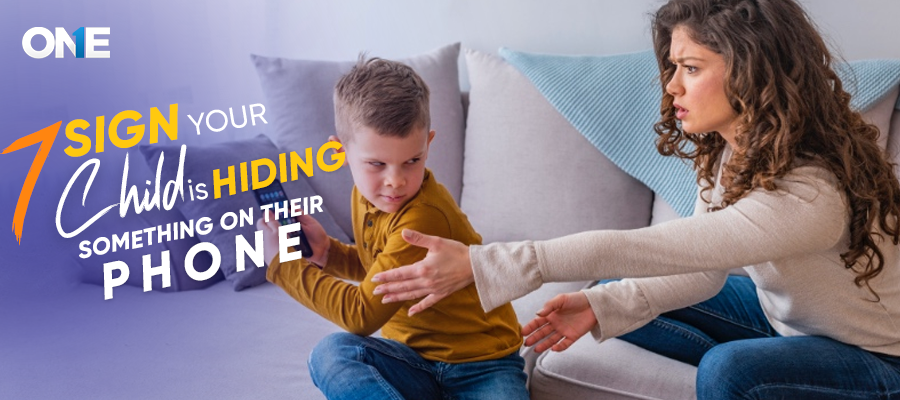
You walked in and the screen flipped face-down. The password changed. The chat closed a half-second too fast. If your stomach dropped, you’re in good company — and you’re probably worrying about the wrong thing.
Kaspersky’s global “Growing Up Online” research found that 57% of children aged 8–16 have hidden something about their online life from their parents. A more recent Kaspersky survey across the Middle East, Turkey and Africa put it at 48% of 11–17-year-olds. Read that again: hiding things is what the majority of children do. It is not, by itself, evidence of danger. It’s evidence of adolescence.
So the useful question isn’t “is my child hiding something?” — the answer is almost always yes. The question is: is this ordinary privacy, or is this a distress signal? This guide is about telling the two apart without tearing your house down over a locked screen.
Why Kids Hide — and Why Most of It Is Healthy
Developmentally, privacy is the point. Building a self that isn’t simply an extension of your parents requires a space parents can’t see. That’s not a bug in your teenager; it’s the process working. When Kaspersky asked children what they were actually concealing, the top answers were mundane: how much time they spend online (57% of those hiding something), and which sites they visit (37%). Not crimes. Screen time.
The other reasons are just as ordinary, and worth holding in mind before you go looking: they want their own space; they don’t want a lecture; they’re embarrassed; they’re testing independence in the low-stakes way kids are supposed to. A locked phone is not a confession.
Here’s the line worth sitting with, from Kaspersky — a company that sells parental control software: it is understandable that parents can’t monitor everything their children do online, but it isn’t necessary to; what matters more is building and maintaining a close relationship. When a vendor tells you their product isn’t the main answer, that’s worth hearing.
The Line Between Privacy and a Warning Sign
Almost every “7 signs your child is hiding something” list makes the same mistake: it treats single behaviours as evidence. A password becomes suspicious. A closed laptop becomes proof. That framing generates a lot of anxious parents and a lot of unnecessary conflict — because in isolation, none of those behaviours mean anything.
What actually matters is convergence: several changes appearing together, persisting for weeks, and clustering around the phone rather than around normal life.
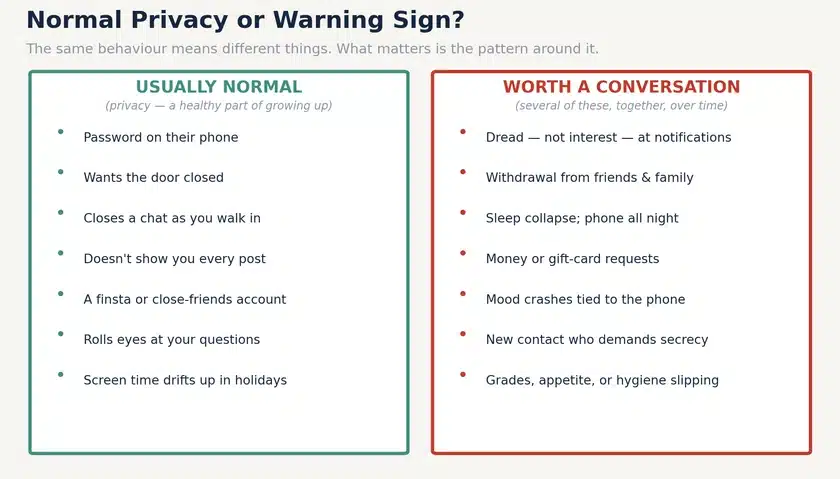
Figure 1 — The behaviours on the left are near-universal and rarely mean anything alone. Several from the right, together and sustained, are worth a calm conversation.
The signals that genuinely matter
Three patterns deserve attention, because they map to real risks rather than to normal development:
- Dread, not interest, when the phone buzzes. A child who tenses at notifications isn’t enjoying a secret — they’re bracing for something. This is the fingerprint of cyberbullying, and of sextortion.
- Secrecy plus withdrawal plus mood change, together. One alone is adolescence. All three at once, sustained over weeks, is a signal. Add sleep collapse and it moves up the list — 58% of teens already report losing sleep to social media, so late nights alone prove nothing; a child who is exhausted and withdrawn and newly secretive is telling you something.
- Money. Unexplained requests for cash or gift cards is the single most specific red flag on this page, because it is the mechanism of financial sextortion — NCMEC logged more than 50,000 reports in 2025, roughly 137 a day, with boys aged 14–17 the primary targets. A teenage boy who suddenly needs money and won’t say why is a genuine emergency, not a discipline problem.
What Actually Works: Ask, Don’t Raid
The instinct when you’re frightened is to seize the phone and read everything. It rarely helps, and it usually costs more than it finds. Here is the most important number in this entire article: 75% of children told Kaspersky they would feel safer if they could talk to their parents about the dangers they meet online. Three-quarters of kids are waiting for a door to open. A raid closes it.
Open the conversation without an accusation
- Pick a side-by-side moment — a car, a walk, doing dishes. Eye contact raises the temperature; a shared task lowers it.
- Lead with the observation, not the verdict: “You’ve seemed flat this week, and you’re on your phone till 2am. I’m not angry — I’m asking.”
- Ask about the world, not the crime: “Has anyone online ever made you uncomfortable?” gets further than “Who are you texting?”
- Say the amnesty clause out loud, and mean it: if you bring me a problem — even one you caused — my first job is to help, not punish. In sextortion cases this single promise is the difference between a child who tells you on day one and a child who pays a blackmailer in silence.
- Name the specific scam. Two-thirds of young people have never heard the word sextortion. You can’t recognise a trap you don’t know exists — explain it plainly, and explain that the child is never the one at fault.
When something is genuinely wrong
- Stay calm and make clear they’re not in trouble. Shame is what keeps kids silent.
- For sextortion: stop all contact, never pay, screenshot everything, and report to local police and NCMEC’s CyberTipline (report.cybertip.org). Paying almost never stops the demands. NCMEC’s Take It Down service can help remove intimate images of minors from participating platforms.
- If you see signs of self-harm or suicidal thinking, call or text 988 (the Suicide & Crisis Lifeline), available 24/7 across the U.S.
Where Monitoring Software Fits — and Where It Doesn’t
If your worry is “my child has a password,” software isn’t the answer to that — nothing is, because there’s no problem to solve. But if you’re seeing the convergent pattern above and you can’t get visibility any other way, a parental monitoring app can surface what a child won’t volunteer: a new contact who appeared out of nowhere, keywords tied to bullying or self-harm, or the gap between the screen time they describe and the screen time that’s happening.
TheOneSpy is built for exactly that — exception-based alerts rather than a live feed of your child’s day, across Android, iPhone/iPad, Windows and Mac in one dashboard. Two conditions make it work: your child knows it’s there, and it scales back as they grow. Used that way it opens conversations. Used as a secret trap it does the opposite, and the research is blunt about the cost: covert surveillance, once discovered, destroys the trust that makes a child come to you when something goes wrong.
And if what you actually need is a conversation rather than a dashboard — have the conversation. That’s free, and on this evidence it works better.
Frequently Asked Questions
Is it normal for my child to hide things on their phone?
Yes. Kaspersky’s global research found 57% of 8–16-year-olds have hidden something about their online activity from parents, and most of what they hide is mundane — how long they’re online and which sites they visit. Privacy is a normal part of developing independence. What matters is the pattern around the hiding, not the hiding itself.
What are the real warning signs, as opposed to normal teen privacy?
Convergence over time: dread rather than interest when notifications arrive, withdrawal from friends and family, sleep collapse, mood crashes tied to the phone, a new contact demanding secrecy, and — most specifically — unexplained requests for money or gift cards, which is the mechanism of financial sextortion.
Should I go through my child’s phone?
Rarely, and not as a first move. 75% of children say they’d feel safer if they could talk to their parents about online dangers — a search closes that door. If you have a specific, serious concern and no other route to it, act openly rather than covertly, and say why.
My teen has a second secret social account. How worried should I be?
Second accounts (‘finstas’) are extremely common and usually about performing less for a wide audience, not concealing harm. Ask about it directly and without accusation. Worry when the second account is paired with the convergent signals above.
What do I do if I find something genuinely serious?
Stay calm and make clear your child isn’t in trouble — shame keeps kids silent. For sextortion: stop contact, never pay, preserve evidence, and report to police and NCMEC’s CyberTipline. If there are signs of self-harm, call or text 988.
Sources
- Kaspersky — “Growing Up Online” global survey (57% of 8–16s have hidden online activity; 75% would feel safer talking to parents)
- Kaspersky / Toluna — survey of 10,000 parents and children, META region (48% of 11–17s hide online activity), 2025
- NCMEC — CyberTipline financial sextortion data (2025–2026)
- Thorn — youth sextortion awareness research (2025)
- Pew Research Center — Teens, Social Media and Mental Health (2025)
- U.S. Surgeon General — Advisory on Social Media and Youth Mental Health (2023)