“But dad, it’s just a game, nothing else. All my friends are playing it.”
The statement usually comes from the minors who do not realize the gaming platforms have drastically changed. Now the games have voice communication with strangers, let users make in-app purchases, share mature themes and graphics, a nd other explicit content that your kids are not ready to handle.
Many parents have the misconception that apps available on the Google Play Store or the App Store are safer for kids to play. However, the reality is totally different. Yes, the Play Store and App Store provide age recommendations, but they do not include an actual reason for what is inside the games; that would be checked after kids download them.
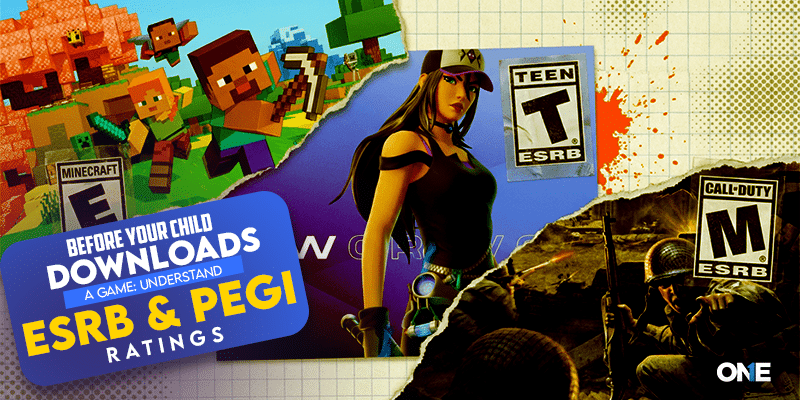
Here comes the importance of game age rating systems such as ESRB and PEGI.
These are not the systems for telling which games are good and which are bad. The main idea here is to understand what kind of content the game may include – violence, horror, gambling, offensive language, or stranger connections on the internet.
Unfortunately, many parents do not know what rating labels E, T, and PEGI 12 really mean, and that the current mobile games are much more social, competitive, and feature-packed than some puzzle games their children played ten years ago.
According to Newzoo’s Global Games Market Report 2025, smartphone gaming apps accounted for more than half of the global gaming market, with revenue reaching $188.8 billion, boosting the app phenomenon.
Here we will try to explain everything parents need to know about the age rating systems such as ESRB and PEGI, how they work, what they mean, and how you should approach choosing mobile games for kids.
Why Are Age Ratings Getting Hype More Than Ever Before?
The Mobile gaming market has completely revolutionized over the past few years. Now the gaming platforms, whether it’s for iOS or Android, have the most user-personalized experiences to keep the user hooked. the enable voice communication where you talk with your opponents, play multiplayer matches, use AI-generated content, online communication, battle passes, loot boxes, and continuous transactions between the games.
Your kids do not play with the machines; they can communicate with people who live around the world whom they don’t even know in reality.
That’s why age rating becomes extremely important.
First, proper age ratings let parents understand whether the games their kids download contain any mature content that is harmful for the age or maturity level.
Second, after knowing the ratings, parents can start healthy habits of talking and allow kids to think before installing the app on their smart devices or tablets.
However, game ratings are the first step, but they do not tell the whole story behind the game; how it turns out in the future, how users use it, or whether it is appropriate for their age. That’s why informed parenting is still extremely important.
What is ESRB?
The Entertainment Software Rating Board (ESRB) is a famous game rating platform around the world. It was first launched in 1994 and was designed for the USA, Canada, and Mexico and their audiences.
The goal of this organization is simple: it provides parents with all necessary information about the game’s age appropriateness and the type of its content.
Instead of evaluating the game itself (for example, checking whether it’s fun or educational), the ESRB evaluates such things as:
- Presence of violence
- Frightening content
- Gambling
- Language
- Sexual content
- Irrelevant contacts
Before launching the game, the developers have to submit it to the ESRB for evaluation. The organization watches videos of game-play, fills out questionnaires, and reviews scripts and other data, which is how they assign the rating and descriptions regarding the contents of the game.
For parents, these labels are much-needed guidance in knowing what to expect from the game.
Understanding Every ESRB Rating
Early Childhood (EC)
This is the lowest ESRB rating. The games are designed for very young children, mostly for those who are three years old and above.
These games are educational, not too complicated, and free from any content that can make parents uncomfortable. Generally, they lack any conflict, frightening scenes, and advanced online features.
This age rating is becoming rare on the modern app stores but is useful for preschool learning games.
Everyone (E)
The Everybody (E) rating states that the game is intended for those who are six years and older.
The game may include minor cartoon violence, some minor fantasy action, and some comic mischief. There will be no strong language in the video game.
Puzzle and sports games, simulation games, and different games for families can receive this rating. However, if those games are categorized as Everybody, the experience might be disturbing.
According to ESRB breakdown data reports, Everyone (E) ratings are the most common ratings and are suited for the aged 13 years or teens.
Everyone 10+ (E10+)
When kids reach the age of 9 to 10, they prefer action-packed games, animations, etc., and that’s where the Everyone 10+ rating comes in:
Such games can include:
- Light fantasy violence
- Light combat
- Slightly strong language
- Cartoon fighting
- Light suggestive humor
While the content is still designed for children, the game assumes that they already understand how fictional conflicts take place.
Strategy games, adventure games, and action games often get this rating.
Teen (T)
One of the most controversial and misunderstood age rating categories among parents.
These games are made for players who are 13 years old and older. Despite their themes, these games are not for mature audiences.
These games are for the players who are 13 years old or more. Despite that age, these ratings are not for the older users.
The games that contain low-quality content use third-party standards: jokes, show violence, blood, gambling, or abusive bad wordings, etc.
Many multiplayer games contain the violent content and online interactions that are available on these sites and have high ratings. Parents should be aware of these features before checking the ratings.
If your kids are under 13, it would be a better choice to check their gameplay, rather than leaving it to their own devices or relying solely on the rating.
Mature 17+ (M)
Games are categorized for older users, especially those who are older than 17. Most of these games show violence, blood, excessive bad language, sexually biased content, gambling, and alcohol and drugs.
Before allowing their children to play the games with this rating, parents should weigh all pros and cons first and foremost because mobile gaming does not always have supervision, as controllers are often deadly boring, hence leaving children unsupervised while playing.
Adults Only (AO 18+)
The highest ESRB rating – Adults Only – is intended for adults only.
These games may contain explicit sexual content, prolonged graphic violence, or real-money gambling mechanics.
Luckily, games rated this way are quite uncommon in mobile app stores today. Both key app store companies (Google Play and the App Store) follow strict regulations regarding game content.
ESRB Content Descriptors: Here’s What to Know
The age rating tells you the age group for which a game was made, while content descriptors explain the reason behind this rating.
Content descriptors offer more information than age ratings since they describe in detail the player’s experience.
For example, some of the warnings can be marked:
- Violence: can range from playful cartoony characters to fighting combat.
- Fantasy Violence: fights of imaginary characters and creatures.
- Blood: presence of very small blood volume without injuries.
- Intense Violence: battles with injuries.
- Strong Language: rude or bad words.
- Crude Humor: dirty jokes.
- Lewd Themes: mild sexual and explicit content that is not suitable for the kids.
- Gambling graphics: graphics, aids that are related to Casino-Gambling.
- Drug/Alcohol concerns: ads that have drug/alcohol usage.
In addition to the age rating, parents should look for the above-mentioned descriptors, as they provide detailed information about the contents of the game.
Interactive Elements of the ESRB Label Should Not Be Ignored
One of the most significant changes in the gaming industry during the last several years is the fact that games became something more than the content of the original title.
Therefore, ESRB introduced a new strategy called Interactive Elements that helps parents understand the game-play and online interactions offered by video games.
For instance, ESRB generates label signs for the interactive label; an interactive label means players can interact through the voice or messages within the games with anyone else in the world.
The other label indicates in-app purchases, which reveals that gamers can make the payments inside the gaming apps.
Apart from this label, there are some other possible labels such as Shares Location, which means that users of the game can share their locations while playing. The internet label means the game has internet access.
Even though these labels are not directly linked to the ratings, these are still important factors parents can consider. As this shows, parents need to learn the in-depth coverage of the games and the challenges they may bring. It can be stranger contacts, receiving messages from random people, or making useless in-app purchases. That’s the parents should review the interactive elements before letting kids download the game.
What Is PEGI? Why Do Parents Across the Globe Trust It So Much?
If you reside in Europe or download games meant for the global audience, then you must have come across the colorful numbers like PEGI 7 and PEGI 16 on game websites. PEGI, which stands for Pan European Game Information, has been there since 2003 the help parents decide about certain games.
Currently, it is being used in almost all European states and is regarded as the most sought-after game rating system.
Similar to ESRB, PEGI doesn’t evaluate the entertainment value or educational purpose of the games. It assesses their content and gives a recommendation regarding the minimum age that players are supposed to have to enjoy playing these games safely.
One of the things that makes the PEGI rating system easy to understand is the numbering system used by this agency.
Unlike ESRB, it does not use “Mature”, “Teens” or other labels.
Rather, it just indicates the age restrictions of the players, meaning 3, 7,12, 16. Or 18. These ratings help parents distinguish which app, according to age group, suits their kids or not.
Every PEGI Age Requirements
PEGI 3
This sort of rating identifies the gaming platform as suitable for the everyone, all age groups. It does not contain disturbing content, offensive wording, or fighting/combat, etc. These games have the elementary factors that are related to learning, creativity, solving puzzles, and racing adventures.
PEGI 7
PEGI 7 is a quite exciting rating for gaming platforms, but it can produce mature content.
Children can encounter fantasy violent characters, fighting in fantasy worlds, and some scenes that are scary for the minors. Otherwise, the platform is user-friendly.
The most common examples of such games are platform games, adventure games, and action games for children.
PEGI 12
Here, parents need to pay extra attention.
Games rated PEGI 12 might contain realistic violence applied to fantasy characters, moderate violence applied to human-like characters, mild gambling simulation,n or slightly offensive language.
Some games can have online multiplayer modes. Therefore, it is necessary to find out whether players can communicate with people unknown to them.
Since many popular mobile games get a PEGI 12 rating, parents shouldn’t base their decision solely on the age number of the rating. It is better to study carefully the content descriptors which accompany this rating.
PEGI 16
Such games are meant for the teenagers. The games possess realistic violence, mature or strong language, tobacco, alcohol and drugs, or adult themes that kids do not understand.
In 2026, PEGI starts rating PEGI 16 for the games that contain loot boxes. This reflects the use of gambling and alcohol inside the app.
More psychological horror elements, crime-based plots, and more intense combat are common in this category of games.
PEGI 18
PEGI 18 refers to the fact that this game is exclusively the adults or 18+.
These games can showcase brutal materials: explicit themes and open descriptions of using drugs, alcohol, and gambling.
Parents should not let their kids play such games no matter what their friends say. Following the age rating advice will help to prevent any problems later on.
PEGI Content Descriptors Explain the Whole Picture
The game could have symbols indicating Violence, Horror, Swearing, Gambling, Sex, Drugs and Discrimination, to name a few. One of the most important icons is the In-Game Purchases icon that alerts parents to the fact that players could be required to spend money.
Instead of thinking each PEGI 12 or PEGI 16 game is the same, parents should first view the descriptors of the game. Even games that have the same PEGI rating might differ greatly because of the issues they deal with.
ESRB vs PEGI? What’s the difference?
Yes, the purpose of both platforms is the same, but both are a bit different too.
| Features | ESRB | PEGI |
| Primary Area | United States, Canada, Mexico | Most European countries |
| Rating System | Letter-based (E, T, M) | Age numbers (3, 7, 12, 16, 18) |
| Content Warnings | Detailed warnings about content | Visual content icons |
| Interactive Information | Users Interact, In-Game Purchases, Shares Location | Includes In-Game Purchases and online features |
| Parental-Friendly Rating | Very easy once understood | Very easy since the age of the player is displayed |
For parents, neither is best nor worst; both are equally beneficial and independently managed. Both trusted platforms help to secure families. The right decisions and approach with the rating platforms do not ignore the labels or age signs before allowing kids to download the app.
What Game Age Ratings Do Not Tell Parents
This is where many families misunderstand age ratings.
An ESRB or PEGI is a game rating platform that only rates the features that creators use in their games. The major misconception is that it reveals everything after kids play games. But the fact is, what happens inside the game when kids play, no one notices or alerts any rating apps; it does not affect their functionality. That’s where it lacks.
For instance, the game that is considered to be suitable for younger ages may involve:
- Live chat with strangers
- Voice chat during multiplayer matches
- User-generated content
- Social media links
- Permanent advertising
- Promotion of influencers
- In-app purchase pressure
- Unrestricted screen time because of daily rewards and streaks
Games are regularly updated. They get new seasons, events, characters, and social features months after the initial rating was made. Despite being reviewed by rating organizations if needed, parents cannot simply assume that the game experience stays the same all the time.
Thus, an age rating must be regarded as a first safety check—not the last decision.
Hidden Dangers That Exist Inside Modern Mobile Games
Contemporary video games are designed to keep players interested and bring them back as quickly as possible. Unique gaming characteristics like various contests, rewards, battle passes, and wins make children use games every day and stay in front of their screens.
Also, many games depend on social aspects of gaming. The kids start playing with their schoolmates, friends, or can play with anyone outside the world, not just play but also can communicate through voice or chats. Regardless of how improved the moderation steps are, due to strangers’ contacts, kids can be exposed to cyberbullying, inappropriate language, or abusive attempts that could harm their mental and physical well-being.
Another problem is money spending. Microtransactions may seem insignificant since they consist of just a few dollars for extra lives or cosmetic items. Still, they can add up, especially when there are already available payment methods. Also, kids use different transactions for the sake of reward systems used in the game, known as loot boxes.
Lastly, even the games that are perfectly aligned with the kids’ age can cause kids to be in distress, lose focus, experience sleep deprivation, and affect physical and mental health. So the proper balance is necessary to survive in the high-end gaming world effectively.
The rise of AI creates new hurdles in gaming. Various games utilize AI to customize game-play, advise players, and create realistic avatars. This enhances the experience, but it also allows AI to improve children’s gaming capabilities and creates issues with separating human and machine involvement, and ensures that children are exposed to AI interactions without any monitoring from caregivers.
How Parents Can Pick Safest Mobile Games
Take time and deep thinking before letting kids install the gaming apps that look harmless.
First, check the app rating, its content descriptors, and its features; whether it includes the option of in-app purchases; and reviews from users. Add extra safety by checking for issues not present in the app descriptions, like irrelevant chats and offensive monetization practices.
Try to play the game yourself for some time, even if it looks easy and harmless. Just a little session can give you a better idea of its pace, aims, and social features.
More importantly, keep talking with your child. The child will be more willing to talk about unpleasant experiences if they know they will not instantly lose gaming privileges for telling about it.
Age Ratings Are Useful—but Constant Supervision Is Important
ESRB and PEGI provide a great start, but they cannot replace parents’ participation.
With age, children often download new games, connect to online communities, and communicate through gaming apps unaware of the dangers. This is where parental control apps may complement age ratings rather than replace them.
TheOneSpy Parental Control offers tools that give more insight into kids’ digital life than any age rating can do. Parents can track the app usage rate and the time spent playing the game. They can use Screen Time Monitoring as a good practice for maintaining and establishing a meaningful daily lifestyle. They may also watch the Screen Videos to learn the ins and outs of the game mechanics if some concerns arise over its usage.
Those tools are not meant to spy on your children. They will help you guide your child towards healthy digital habits. Along with conversations and understanding of ESRB and PEGI ratings, they can help you create a balanced approach to safe mobile gaming.
Final words!
In short, game ratings such as ESRB and PEGI can be helpful but don’t quite provide parents with the entire picture. As mobile games are increasingly interactive, it is vital to go beyond their age classifications and be aware of who their children are interacting with.
Just a few minutes of research about any game rating and talking about online security would make a difference. The aim is not to limit kids from gaming but rather to ensure they can enjoy games safely.