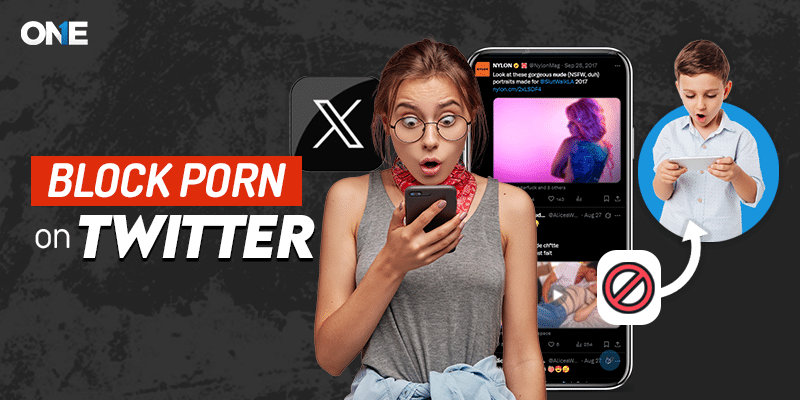
There is one fact about X that matters more than every other piece of safety advice combined, and most parents don’t know it: X is the only major social platform that formally permits pornography.
Instagram bans it. TikTok bans it. YouTube bans it. Facebook bans it. On 3 June 2024, X went the other way — replacing its old Sensitive Media rules with an Adult Content policy that explicitly allows users to post consensual pornography, on the grounds that “sexual expression, whether visual or written, can be a legitimate form of artistic expression.”
The minimum age for an X account is 13.
How Much Adult Content Is Actually There?
Reuters reported an internal Twitter estimate that 13% of all content on the platform was adult content — and that was in 2022, before the policy was formalised and before the well-documented growth in porn bot accounts.
So this isn’t a moderation failure of the kind every platform has. On Instagram, pornography is against the rules and gets removed when found. On X, it’s permitted content that the platform has decided to host. That’s a different thing, and it deserves a different response from parents.
What X’s Protections Actually Are
X does place restrictions around it, and they’re worth stating accurately:
- Adult content must be labelled and sits behind a content warning users have to click through.
- It’s not permitted in highly visible places — profile pictures, banners, headers.
- Users under 18, or without a birth date on their profile, cannot view it.
- Content sexualising minors, or depicting non-consent or exploitation, is prohibited outright.
- The policy covers AI-generated material too — including cartoons, hentai and anime.
Now the part that matters. The age gate is a birth date the user typed in themselves.
A thirteen-year-old who wants to see adult content changes one number in their profile. There is no verification, no ID check, no cross-reference. The protection is an honour system, applied to exactly the population least likely to honour it.
That’s not a criticism of X’s engineering — it’s a statement about what self-declared age gates can and can’t do, and it’s why “X has protections for minors” is technically true and practically thin.
Is Your Teen Even On It?
Probably not, and this is the other thing worth knowing before you worry too hard.
Pew Research Center found 17% of US teens use X — down from 23% in 2022. It is one of the least used major platforms among teenagers, ahead of only Reddit and Threads. For comparison: YouTube 90%, TikTok 63%, Instagram 61%, Snapchat 55%.
So X is a smaller problem than Instagram or TikTok by sheer numbers. But it’s a different problem — the content that’s an exception elsewhere is policy here. If your teen is in that 17%, this is worth ten minutes.
The Settings, If Your Teen Uses X
Do these together, on their account:
- Check the birth date on the profile. Settings → Your account → Account information → Birth date. If it says they’re 24, that’s the whole conversation right there.
- Turn off sensitive media. Settings → Privacy and safety → Content you see → uncheck “Display media that may contain sensitive content.”
- Filter search. Settings → Privacy and safety → Content you see → Search settings → tick “Hide sensitive content.”
- Protect their posts. Settings → Privacy and safety → Audience and tagging → Protect your posts. This makes the account private — followers must be approved.
- Restrict direct messages. Settings → Privacy and safety → Direct Messages → set to “No one” or “Verified users only.” DMs from strangers are where the grooming and sextortion contact happens on any platform.
- Turn off precise location and review Discoverability so their email and phone number don’t surface the account.
Note what’s missing from that list: X has no parental control system. There’s no equivalent of Instagram’s Supervision, Snapchat’s Family Center or TikTok’s Family Pairing. Every setting above lives on your teen’s account, changeable by your teen, in ten seconds. That’s a meaningful gap and it’s fair to weigh it.
The Other Risks, Briefly
Adult content is the distinctive issue, but it isn’t the only one:
- Open DMs. Any account can message an unprotected account. This is the standard first step in the sextortion pattern — a friendly stranger, a fast move to private chat. Our guide to what sextortion is and how it works covers the sequence.
- Graphic violence. X’s Violent Content policy is more permissive than its competitors’, and distressing footage circulates freely.
- Harassment at scale. Quote-posting makes pile-ons trivially easy in a way that other platforms’ architecture doesn’t.
- Nothing is really deleted. Screenshots outlive posts. That applies everywhere, but X’s public-by-default culture makes it more likely.
So Should You Let Your Teen Use X?
We’re not going to pretend there’s one answer, but here’s an honest framework.
Under 16: hard to justify. The distinctive draw of X — news, politics, niche communities — is thin for most younger teenagers, the porn is policy rather than accident, and there’s no parental control layer to fall back on. Most kids in this age group aren’t asking for it anyway.
16–17: reasonable, with the settings above done together and an honest conversation about what’s on there. At this age a blanket ban on a public-square platform is likely to produce a secret account rather than compliance, which leaves you worse off.
Whichever you choose, say why. “It’s the one big platform that allows porn, and its age check is just a box you type in” is an argument a sixteen-year-old can actually evaluate. “No, because I said so” is one they’ll route around.
Where Monitoring Fits
The free tools don’t reach far here. Router-level DNS filtering can block adult sites but can’t isolate adult content inside X — it’s all one domain. Google Family Link and Apple Screen Time can block the app entirely, which is a real option for younger teens, but it’s all-or-nothing.
That gap — a platform with no parental controls, on a device you don’t hold — is where a monitoring app has a genuine role: app blocking, time limits, and alerts across Android, iPhone/iPad, Windows and Mac in one place. TheOneSpy can do that, and if X is the specific worry, blocking the app with Screen Time or Family Link costs nothing and does the same job.
The usual two conditions: your child knows it’s there, and it scales back as they grow. On a platform where the settings live on their account and they can undo any of them in seconds, a tool they’ve agreed to is worth considerably more than one they haven’t.
Frequently Asked Questions
Is X (Twitter) safe for teens?
Less so than its competitors, for one specific reason: X formally permits pornography, which Instagram, TikTok, YouTube and Facebook all prohibit. Reuters reported an internal estimate that 13% of Twitter’s content was adult even back in 2022. The minimum account age is 13, and the only barrier between a 13-year-old and that content is a birth date they typed in themselves.
Does X allow pornography?
Yes. On 3 June 2024, X replaced its Sensitive Media policy with an Adult Content policy explicitly permitting consensually produced pornography, including AI-generated, cartoon and anime material. It must be labelled and kept out of profile pictures and banners, and users under 18 or without a birth date on file can’t view it — but that age check is self-declared.
Does X have parental controls?
No. Unlike Instagram Supervision, Snapchat’s Family Center or TikTok’s Family Pairing, X has no parental control system. Every safety setting lives on your teen’s own account and can be changed back by them in seconds. If you need enforcement rather than agreement, your options are blocking the app via Screen Time or Family Link, or a monitoring tool.
What age can you use X?
13, per X’s terms of service. There’s no meaningful verification, and the same self-declared birth date that opens the account is what governs access to adult content.
How many teens use X?
Around 17% of US teens, according to Pew Research Center — down from 23% in 2022, and one of the least used major platforms among teenagers, ahead of only Reddit and Threads. YouTube is at 90%, TikTok 63%, Instagram 61%, Snapchat 55%. If you’re prioritising where to spend your attention, X is rarely the first place.
Sources
- X — Adult Content policy (announced 3 June 2024, replacing the Sensitive Media policy)
- NBC News — on X formalising adult content, and how the policy contrasts with Meta, TikTok and YouTube
- Reuters (October 2022) — internal Twitter estimate that 13% of platform content was adult content
- Pew Research Center — Teens, Social Media and Technology: X at 17% of US teens, down from 23% in 2022
- X — sensitive media settings and account privacy controls