Texting while driving causes more than 3,000 deaths in the United States every year. The National Highway Traffic Safety Administration classifies it as a form of distracted driving three times more dangerous than driving under the influence of alcohol. And the group of people who are most at risk — by far — is that of driving-aged youth between 16 and 24 years old.
Teenagers understand that sending text messages while driving is dangerous; studies consistently show that over 90 percent recognize the threat. However, the same studies find that almost 50 percent still do it anyway.
The difference between knowing something is dangerous and not doing it anyway is where parental tools matter most. And it is precisely the gap that TheOneSpy’s block texting-while-driving feature is designed to close.
Why Telling a Teen Not to Text While Driving Isn’t Enough
A teenager’s brain development isn’t fully formed until age 25, particularly when it comes to controlling impulses and assessing risks. This is not a parenting failure or a character flaw. It is neuroscience.
A notification arrives when a teenager is driving. The instinct to check it is immediate. The knowledge that checking it is dangerous is present, but it competes with several other factors: the social pressure of being seen to respond quickly, the expectation that the message might be important, but the habit of checking the phone has been built over time, years of smartphone use.
Rules, conversations, and agreements are genuinely useful. They establish the right values. They do not override the neurological reality of an impulsive decision made in a moving vehicle. A technical control that prevents the phone from receiving notifications or sending messages while the vehicle is in motion does not depend on willpower. It removes the
decision entirely.
What TheOneSpy’s Driving Block Does
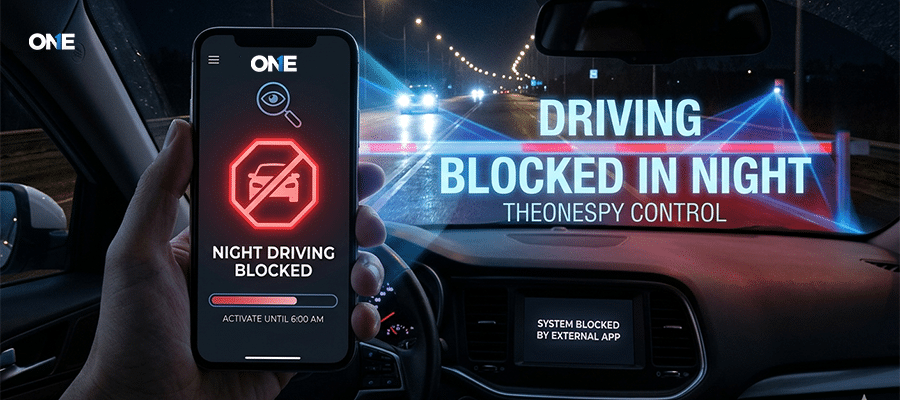
TheOneSpy’s block-texting-while-driving feature detects when the managed device is moving at a speed consistent with vehicle travel, and automatically restricts access to messaging and internet use for the duration.
This means:
- Incoming text notifications are suppressed while the vehicle is moving
- Outgoing messages cannot be sent from the device while driving
- Internet access is blocked while driving, removing the temptation to open social media
- apps
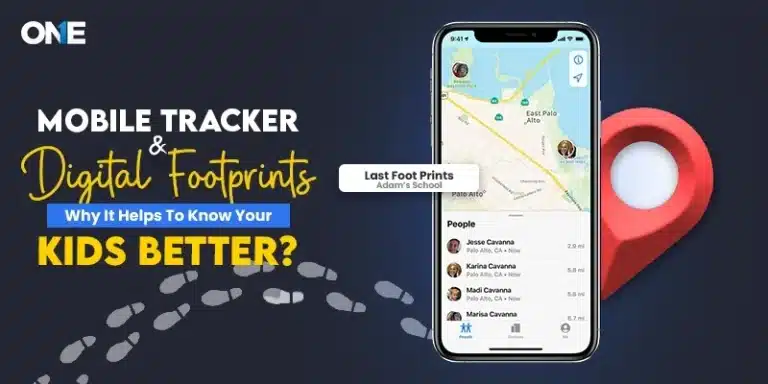
- The parents’ dashboard records driving periods, including duration and distance
The feature works passively — no action is required from the teenager, and no decision needs to be made in the moment. The phone simply does not allow distractions when it detects driving conditions. Blocking the internet while driving provides broader coverage across apps and browsing. Creating a complete restriction of non-essential phone use during vehicle travel.
The Statistics Parents Should Know
Sending or reading a text takes a driver’s eyes off the road for an average of five seconds. At 55 mph, that is the equivalent of crossing a full football field blind.
- Vehicle accidents are the number one killer of teenagers in America; over 2,400 teenage lives are lost every year from this problem.
- Teen drivers are involved in fatal crashes at a rate nearly three times that of drivers
- aged 20 and over.
- Research involving in-vehicle cameras has demonstrated that distraction accounts for approximately 60% of moderate-to-severe crashes among teen drivers.
These are not abstract risks. They are the documented outcomes of the same impulsive decision that teenagers make every day — the decision to quickly check a message before putting the phone down again.
A Scenario That New Parents of Drivers Recognize
Let’s imagine a teenage girl who just passed her driver’s test a few weeks ago and has access to the family car for school runs and recreational purposes. Her parents have talked to her about using her phone while driving. She agrees it is dangerous. She intends to keep her phone in her bag. The first few weeks go fine.
Then a friend sends an urgent message while she is on the motorway. The message preview is visible on the lock screen. She glances at it. She starts to type back. With TheOneSpy’s texting block active, the phone does not show that preview while the vehicle is moving. Her friend’s message waits.
The conversation happens when the car is parked. The decision that could have cost lives was never presented as such.
Does This Work Alongside Driving Apps?
Several dedicated apps exist to prevent distracted driving. TheOneSpy’s advantage for parents already using it for broader parental monitoring is consolidation — the driving block operates within the same dashboard and subscription as the family’s existing monitoring features. Parents can review GPS location data from driving sessions, confirm that driving periods align with stated destinations, and have the driving block active automatically without needing to manage a separate application.
Comparison: Rules vs. Technical Controls
|
Approach |
Reliance on willpower |
Works in the moment |
Parent can verify |
Catches all
trips |
|
Agreement / Rules |
High |
Sometimes |
✗ |
✗ |
|
Phone-in-Bag Habit |
Medium |
Often |
✗ |
✗ |
| TheOneSpy Driving Block | None | Always | ✓ |
✓ |
Pricing and Getting Started
The distracted driving block is included in TheOneSpy plans starting from $18/mo. It works on Android devices in the managed device’s standard configuration. See the pricing page for full plan and compatibility details.
Safer Driving Starts Before the Car Moves.
View Plans and Pricing — From $18/mo →
- Block Texting While Driving
- Block Internet While Driving
- GPS Location Tracking
- All Parental Control Features
TheOneSpy is for lawful parental monitoring on devices you own or are legally permitted to manage. Use in compliance with applicable laws. See our Terms and Privacy Policy.