
Pornography addiction in kids or teens is a growing concern in the digitally driven world. The fast development of the internet offers unrestricted access to adult and age-inappropriate content. Exposure to porn content leads to mental, emotional, and social trauma. That’s the concern!!! But luckily, the latest technology offers monitoring solutions that help parents safeguard their children effectively. Thus, know-how can use monitoring applications to stop pornography addiction in children.
What Is Pornography Addiction in Kids?
Pornography addiction in teens and kids means excessive use of the internet and access to explicit content that directly affects their mental and physical health.
The symptoms of porn addiction are as follows:
- Decline in academic performance
- Withdrawal from the friend circle
- Sudden behavior change
- Obsession with adult content
The consequences of porn addiction are serious and can destroy relationships and are a significant cause of social breakdown. Unfortunately, our teens never understand the long-term consequences that require earlier prevention.
Kids’ Social Media Addiction: Latest Report
The latest report by Behvil & Associates shows 93% of boys and 62% of girls are exposed to porn sites before the age of 18. And more than 70% of boys spend a minimum of 30 minutes on online pornography, and 35% of boys are seen occasionally. 79% of teens watch porn accidentally, not deliberately.
But you must be amazed: 83% of boys watch pornographic content in the form of groups, and 67% of teens clear their internet history to remove clues of their activities.
But do you know how many websites are registered on the internet as porn sites? Let’s explore.
More than 25 million websites on the internet are registered as porn sites. Every 2 out of 100 is porn. Thus, 40 million U.S. People visit adult sites regularly, and 70 million per day search.
The Causes of Pornography Addiction in Kids
Addressing the issue of pornography addiction is necessary for kids because it has various factors that affect kids’ mental and physical health. Some of the primary reasons are mentioned.
Excessive Screen Time
Excessive screen time is a growing concern that can negatively affect children’s mental health and increase their exposure to online pornography. Spending unlimited hours on digital devices may also raise the likelihood of children engaging in risky or inappropriate online activities while making it harder for them to maintain a healthy balance between their digital and social lives.
Easy Access to Content
In the world of the internet, it’s easy to get access to porn and adult content. There are a lot of factors that help users easily watch adult websites and porn games, such as social media links, free porn games or adult websites, and unfiltered browsers like Chrome, Firefox, and more. However, it’s necessary to monitor and control over porn access to kids.
Lack of Supervision
Most parents don’t care about their children’s online activities. There are many reasons why people may be unaware of kids’ activities. They may be busy or working parents, have limited awareness, or have no tech knowledge. These may be caused by a lack of supervision for kids. But with all these, parents should focus on their children’s habits and monitor everything they’re doing online.
Social Influence and Peer Pressure
Social influence and peer pressure play an important role in kids’ digital behavior and exposure to pornographic content. While friends connect online, they share explicit content and discuss it in groups to engage others and develop a curiosity to view pornographic content. At this point, kids are unaware and unable to understand the consequences.
Emotional Triggers
Several kids turn to pornography as a way to cope with emotions and stress. They may include stress, anxiety (family conflict, school pressure, or escape behavior), boredom (engaging with the internet and discovering explicit content), loneliness, and depression, leading to watching pornographic videos.
Uncontrolled Digital Boundaries
Kids who use digital devices and the Internet independently increase their chances of encountering inappropriate content. When they spend unlimited hours online and search for unethical content to watch, it’s time to restrict kids’ devices and internet access to protect them.
How to Stop Kids from Watching Pornography using TheOneSpy
Breaking kids’ pornography needs vigilance with the use of digital technology, such as monitoring applications. But you’ve got to start with restrictions and create boundaries for internet and device usage. As a parent, you must teach your children to use the internet responsibly.
TheOneSpy is a versatile parental control app designed for digital protection. It helps protect kids against harmful content. The app allows users to review their loved ones’ actions and protect them from uprising threats. TheOneSpy is designed to safeguard children with its unique and premium features.
Once parents install it on kids’/teens’ devices, it ensures a secure digital environment by filtering content, blocking apps and websites, and providing activity reports. Moreover, it helps to control screen time and receive alert notifications about their children’s pornography and other activities.
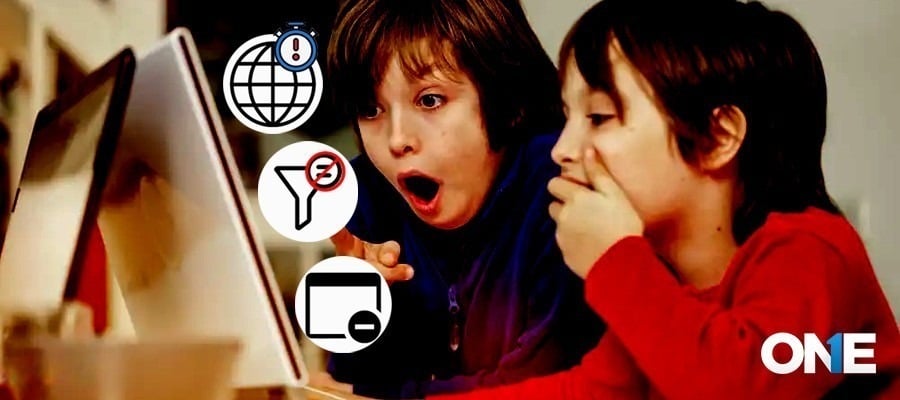
Limit Internet time
Kids should never be given open access to the internet. Think of the internet as a never-ending candy that your child will quickly get addicted to, and having too much of it is harmful to their health. Moreover, if you restrict internet time, children will learn time management, which will be helpful for many years. Limiting internet time can be done quickly via TheOneSpy’s block internet feature.
All you need to do is punch in a specified time, and the monitoring application will automatically cut off all internet access once that time is reached. The way to block the internet connection will be through a password that you, as the parent, will be aware of. This way, your kid will only use the internet for necessary things, as they will know that time is limited.
Employ Filters and Block Websites
TheOneSpy monitoring app allows parents to feed in different filters that will help block adult content websites. These filters can be in the form of individual words or even complete phrases that you can use to feed the children.
Once done, the application will not let your kid access any sites or search for such content. Moreover, some monitoring applications also allow notifications to be sent to the parent device or smartphone every time the search engine detects any filtered words being used. It will block the word from being searched and also automatically send you a notification.
Restrict Downloading Applications
Pornography can be found in every corner of the cyber world, and it has also embedded itself into many applications today. The best porn blocker apps can help parents block unwanted applications that may be installed on their children’s devices. With these tools, you can ensure that only trusted sources like the Google Play Store, Apple App Store, or other approved platforms can be accessed for downloading apps. The monitoring app will not allow a child to download any application without a passcode that only you know. This way, if your child wants a specific application on their device, they will first need to discuss it with you. You can then research the app before allowing them to download it.
Check Web History to Stop Pornography Addiction
Kids are super bright and often find ways to browse the internet without leaving any traces behind. However, TheOneSpy’s browsing history feature goes beyond these loopholes and extracts complete web histories, storing them securely on the online cloud for later viewing.
Kids may try to delete their browsing history after searching for specific content. Still, since the monitoring application creates a blueprint of all online activity in real time, you don’t have to worry about anything going unnoticed. Browsing history logs is also a great way to understand the changing trends in your child’s interests.
Conclusion
Even if you are not a working parent, keeping an eye on your kid 24 hours a day is pretty impossible. Today’s kids are actively involved in activities that are usually outside the realm and comfort of their households, which makes it even more challenging to track their actions and respond to them accordingly.
However, with parental monitoring applications like TheOneSpy, parents are becoming increasingly comfortable allowing their children supervised independence. This kind of freedom also allows the kid to grow up confident and can help you maintain a good relationship for many years.