Teenagers in the United States now average seven hours and twenty-two minutes of screen time per day — and that figure excludes time spent on screens for school or homework. It is more time than most adults spend in a workday, and significantly more than the two hours of recreational screen time that the American Academy of Pediatrics recommends for adolescents.
The consequences of sustained excessive screen time are well-documented in pediatric research. Sleep disruption is among the most significant. Studies published in JAMA Pediatrics found that adolescents who used devices for more than two hours before bed had substantially shorter sleep duration, poorer sleep quality, and higher rates of depressive symptoms than those who did not.
Academic performance follows: the same research links excessive evening screen use to lower GPAs and reduced engagement during school hours. The challenge for parents is not knowing that this is a problem. The challenge is seeing. It is happening in their own home, in a child who is not visibly on their phone during agreed hours, in a household where the rules seem to be followed.
TheOneSpy’s screen time monitoring tells parents what is actually happening. Not what the agreed-upon rules are. What is actually happening?
The 3 AM Problem
Most families with teenage children have some version of a screen time agreement. Phones off after 10 pm. No devices in the bedroom overnight. An agreed daily limit. These agreements are made in good faith and followed — until they are not.
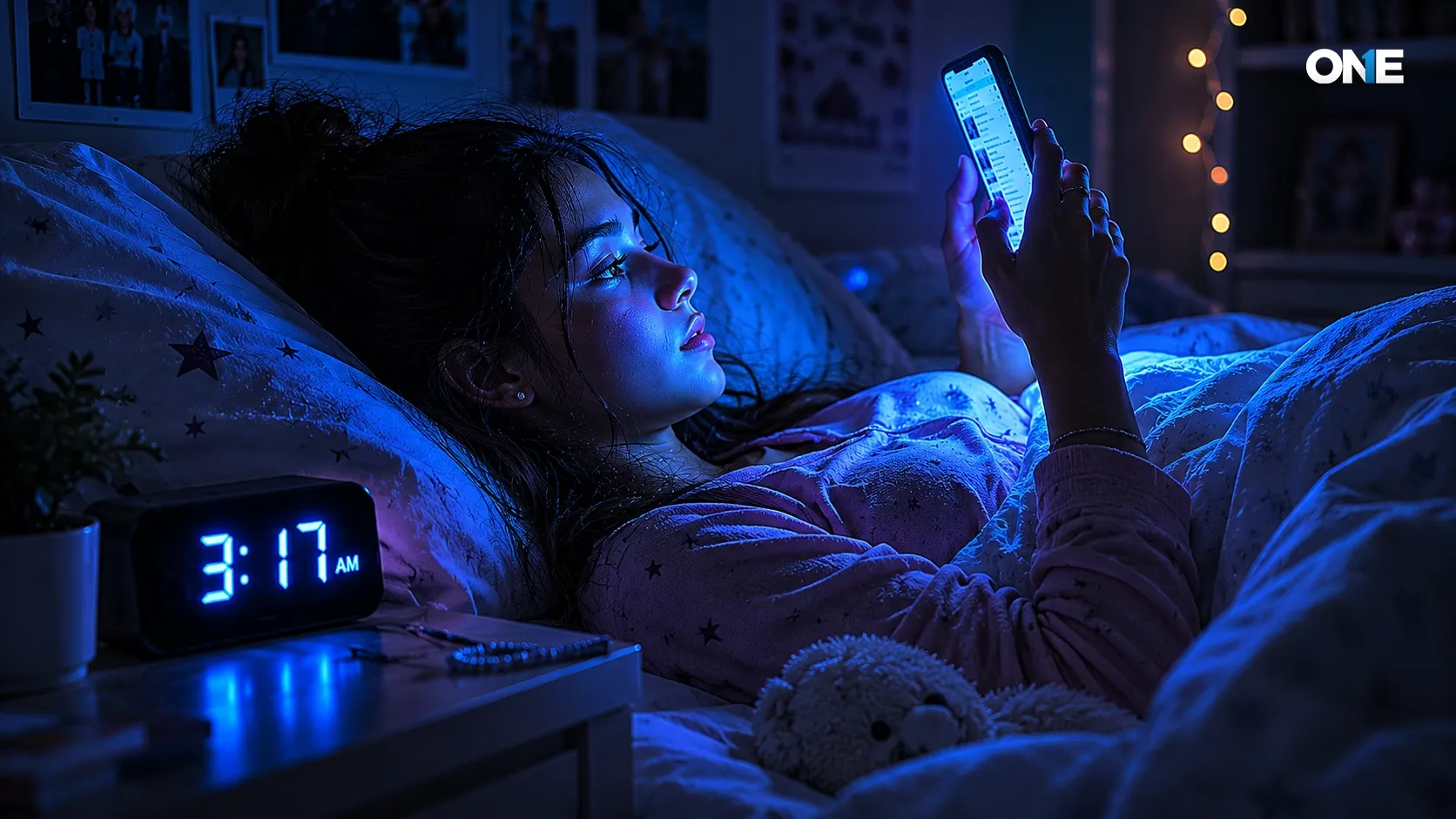
The window of non-compliance that causes the most damage to sleep and academic performance is not the visible, daytime phone use. It is the late-night usage that occurs after parents have gone to bed, and the agreement is assumed to be holding.
Research from Common Sense Media found that nearly 40 percent of teenagers regularly use their phones between midnight and 5 am. The same research found that parents of those teenagers estimated their child’s overnight phone use at a fraction of the actual figure.
This is not deliberate deception in most cases. It is the combination of an adolescent’s impaired nighttime impulse control and a parent’s reasonable but incorrect assumption. That visible compliance during waking hours extends to sleep hours as well.
What Screen Time Monitoring Shows
TheOneSpy’s screen time features provide parents with detailed data on how the managed device is being used — including when, for how long, and on which applications.
Parents can see:
Total screen time by day — actual usage versus agreed limits, broken down by time of day
App-by-app usage breakdown — how much time is spent on social media, gaming, streaming, versus productive or educational applications
Late-night activity data — whether the device is being used during hours when the The child should be sleeping.
Usage trends over time — whether screen time is increasing, decreasing, or stable across weeks
This data creates the factual basis for a different kind of conversation. Not “I feel like” You’re on your phone too much,” — which an adolescent can contest — but “the The dashboard shows the device was in active use from 11 pm to 2 am on four nights this Week.”
App Blocking: From Insight to Action
Monitoring tells parents what is happening. App blocking gives them the ability to act on what they find. Parents can schedule restrictions on specific applications during defined hours — social
media blocked from 10 pm onwards, gaming apps unavailable during school hours, and streaming services restricted on school nights. These restrictions operate at the device level, meaning they cannot be overridden by the child simply changing a setting. The combination of monitoring and blocking creates a practical enforcement mechanism that does not rely solely on self-regulation, which, for an adolescent brain at midnight, is an unreliable resource.
A Scenario Many Parents Will Recognize
Consider a fourteen-year-old whose school performance began declining mid-term. He is not disengaged at home. He seems fine. He is not visibly struggling. His parents are at a loss for an explanation. What TheOneSpy’s screen time data reveals: the device is in active use between midnight and 2:30 am on most school nights. Predominantly a gaming platform and a video streaming app. Total daily screen time is consistently between six and eight hours — the majority of it between 9 pm and 3 am.
The child is attending school on four hours of sleep. His brain is not processing information during lessons. His grades reflect the cognitive impact of sustained sleep deprivation — not a learning difficulty, not disengagement, not anything that a school counselor or a GP is likely to identify without this data.
With app blocking configured to restrict the gaming and streaming applications after 10 pm, the late-night usage stops. Within two weeks, his parents report visible improvement in his alertness and mood. Within a term, his grades recover.
Screen Time Management Compared
| Approach | Shows Actual Usage | Late-Night Visibility | Enforce Limits | Scheduled Restrictions |
|---|---|---|---|---|
| OS Screen Time / Android Digital Wellbeing | Partial | ✗ | A child can override | Limited |
| Agreed Family Rules | ✗ | ✗ | Trust-dependent | ✗ |
| TheOneSpy Screen Time + App Blocking | ✓ | ✓ | Device-level control | ✓ |
Pricing and Getting Started
Screen time monitoring and app blocking are included in TheOneSpy plans starting from $18/mo. Features work on Android devices. Full compatibility information and plan details are on the pricing page.
Tired, Struggling, and You Don’t Know Why? The Answer Is Probably in the Data.
- View Plans and Pricing — From $18/mo →
- Screen Time Monitoring
- App Blocking
- Block Unblock Installed Apps
- All Parental Control Features
TheOneSpy is for lawful parental monitoring on devices you own or are legally permitted to manage. Use in compliance with applicable laws. See our Terms and Privacy Policy