

Social media has become an inevitable part of people’s lives. Children are often restricted from social media platforms like Snapchat, Whisper, TikTok, Instagram, Omegle, and others for various reasons. The causes for using such social media apps include:
- Entertainment.
- Interaction with people in your surroundings.
- Discussion on a variety of issues.
- Seeking advice for personal matters.
- Sharing jokes and venting frustration.
Although these platforms are ideal options for killing time on social media, the unfavorable impact on kids and teens is notable. Parents need to monitor the list of installed apps their kids use to stay informed about the activities they perform and the dangerous social media apps they use. You might be unaware, but your children will be getting negative mental impacts that may ruin their lives.
With a powerful monitoring solution, such as TheOneSpy, you can always keep a monitor of your kids’ whereabouts. Track social media activities closely and spot a red flag before it goes out dangerous.
Top 20 Most Dangerous Social Media Apps that Kids Should Stay Away From
In this era, there are many social media apps that some parents are unaware of. Therefore, it becomes a challenge for parents to protect their children from such dangerous apps. Thus, we’ve compiled a list of the most dangerous apps for kids that they should avoid. It also offers safety measures to safeguard children.
Some social media apps are loaded with hidden dangers that can ruin your kid’s future and also affect their mental and physical health. Let’s take a look at the apps that can harm your kids.
1. Snapchat
This becomes a parent’s nightmare; with billions of users, kids are included in the large user base. Like other apps, Snapchat enables users to share images, videos, and live location, which raises privacy issues.
As with the sharing of personal photos, hackers can hack your data to blackmail you.
Why people choose it: It has incredible features for photos and disappearing features—most people like it.
Why it is dangerous: It is dangerous as its disappearing message features a false sense of security, leading users to believe that no one can save their photo, which is actually secure. But the other can take screenshots without notifying you. So, kids share data that shouldn’t be captured and shared.
2. TikTok
Nowadays, TikTok is the most popular video-sharing social media app worldwide, with millions of users. People download this social media app for entertainment and fun. However, this app requires a minimum age of 13 to download after verification is complete.
Why people choose it: it provides an opportunity to share their feelings via videos on trending songs.
Why it’s dangerous: It’s concerning due to inappropriate video content and vulgar language, which is not suitable for children.
3. Instagram
Instagram is one of the most popular social media apps, with billions of current users. This is an entertaining site for all users; however, it poses some dangers when it falls into the hands of immature individuals.
Why people choose it: Most people like it as a trending social media site and exclusive photo-sharing medium.
Why it’s dangerous: It allows users to connect anonymously; thus, online predators and bullies are present on this site and also contribute to the spread of inappropriate content.
4. Discord
It’s a platform that connects people with the same interests to communicate. It is most popular among gaming communities, and it allows video games to be used for communication during gameplay.
Why people choose: People like to use a platform that connects and allows for communication while playing online games.
Why it’s dangerous: it poses some dangers, like access to inappropriate content and stranger connections that will cause cyberbullying.
5. Whisper
Just like other social media platforms, Whisper is a confession forum that lets users enjoy sharing confessions, texts, messages, photos, and anything else without using a real name. The app identifies the users’ actual location and makes it easy to contact people living within an area one mile away. Kids are using Whisper in a large number and catching horrific effects.
The impacts of this app are also scary, and parents need to keep their kids and teens safe from Whisper, too, as it does not use a real name, so anyone can come online and talk to their children. He might be a sexual abuser, hiker, cyberbully, or some other extremist. Even in 2013, a man was charged with the sentence for raping a 12 years old girl through interaction on Whisper.
Why people choose: this app connects people based on the same interests and profile similarities.
Why it’s dangerous: This app shows live locations where you can meet with others. That’s why cyber bullies and predators access your child through this.
6. Omegle
Omegle is a video chatting app that allows people to connect via video chat from being anonymous. This works as you and the other one are strangers.
This application enables users to connect with people from different cities.
Why people choose: Omegle looks attractive when the user craves something new, such as a chat room.
Why it’s dangerous: it’s dangerous when connected with the unknown, and many parents report that kids contain nudity via this platform.
7- Twitter/ X
Twitter is one of the most prominent social media app. Twitter is now known as X. It enables users to publish fast and concise messages, known as tweets. People use it to communicate, share news, and exchange ideas instantly with an international audience.
Celebrities, politicians, and corporations utilize Twitter to communicate with others, raise awareness, and stay informed about current events and trending stories.
Nowadays, Twitter (X) is highly open, and due to this, uncensored, potentially quick content often immerses adult users. Adult content is gradually attracting adults towards it. That is the reason their inclination towards X is increasing day by day, which is hazardous for their mental health.
Why People Choose it
X is an open-source platform; adolescents might come across adult or even violent material unintentionally, or you can say the porn is just one click away, which can be annoying or even addictive to users. Furthermore, excessive use of the platform may cause screen addiction, stress, and negative productivity.
Why is it dangerous
It conveys information so quickly that it often contains misinformation, rumors, and deceptive content. Such toxic language, bullying, and opposing arguments can be exposed to children and even adults.
X is an open-source platform; adolescents might come across adult or even violent material unintentionally, or you can say the porn is just one click away, which can be annoying or even addictive to users. Furthermore, excessive use of the platform may cause screen addiction, stress, and negative productivity.
8)Tinder:
Tinder, another famous dating app that provides regional data, allows users to swipe left or right, prefer, like, or dislike, and connect with others in nearby areas.
Why people use it: Teens generally want to be part of Tinder, but for many reasons. It can be due to curiosity, a desire to seek attention, or simply a desire to chat with everyone.
Why it’s risky: It is designed for adults, so kids can lie about their age to register. That leads to big risks — including meeting strangers in real life, sexual exploitation, and getting messages that are not okay.
9) Kik:
Kik is an open and free platform where you can contact anyone, including strangers. Without having a personal phone number, you can text, send images, videos, links, etc., to anyone in real-time. Being criticized for openly admitting to inappropriate conversations.
Why people like it: Mostly, kids like to be on Kik as the sign-up process is not complicated, yet simple. Meeting new friends or talking to anyone without readily sharing personal numbers or details.
Why it’s risky: basically, the app that has no restrictions, anyone can contact your kids, leading to sexting, pornography, explicit content, or bullies who manipulate kids’ minds.
10) WeChat
WeChat is a super popular messaging app that encompasses texting, voice and video calls, games, and even payments. It appears to be the do-everything go-to app, but it’s not designed with kids’ safety in mind.
What parents love about it: Teens like it because it allows them to text, game, and post updates all in one location. It’s entertaining, multi-purpose, and easy to use.
Why it’s not safe: Such features as “People Nearby” allow unidentified people to talk to children, which results in indecent conversations or even meetings. Poor privacy settings and many hidden features create a situation where parents cannot be aware of what is going on.
11)HouseParty
Houseparty is a group video chat app where kids can “drop in” on their friends and join online group games.
Why people like it: Because it feels like virtual-hanging out with friends — talking face to face and playing games together.
Why it’s risky: The concern is that strangers can sometimes join group chats, and there is little governance over what is shared in real-time on camera. This can put kids at risk.
12)Holla
Holla is a platform that allows you to make video calls with anyone, anywhere in the world.
Why people like the surprise factor: It keeps teens engaged, meeting new people, and seeing their live actions makes it attractive. Kids find it fun to video chat with new people right away.
Why it’s risky: As there is such a random match, there is a greatly increased likelihood of stumbling upon objectionable content or predators pretending to be someone they are not. You can’t really control who your child ends up talking to.
13)Blendr
Blendr is a location-based app that helps you meet people in your neighborhood.
Why people like it: Teens use it to chat or find nearby areas to make “New friends” near their town.
Why it’s risky: A dating app where the kids approaching are actually imperfect. Additionally, always turning on location invites strangers to join their chat and arrange an in-person meeting.
14)Zoomerang
Zoomerang is similar to a TikTok app, featuring emojis, filters, synced music, and editing tools.
Why people like it: Entertaining, kids find it, and it’s cool to make funny clips or videos to share with followers.
Why it’s risky: It lacks high security measures, strangers can interfere, and comments are shared on posts. Social media is not safe for kids; it has dark and dangerous sides. Leading younger ones to harassment, bullying, or exposure of explicit content, forcing kids to send nude images. It can cause the promotion of images on the dark web or porn sites. Law-abiding companies have tried to catch up with the bad groups, but the latter continue to grow, aided by technological advancements.
15)Parlor
Parlor is a social media app that allows users to engage in conversations with strangers from around the world.
Why people like it: Teens have a way of sneaking past this app’s “age-appropriate” clampdown — although adults can also easily broadcast themselves playing an online game, pranking friends, or sharing cheesy karaoke.
Why it’s risky: Who your child is speaking to isn’t really being policed. Predators and bullies, and dirty chat are also frequently encountered on the site.
16)Hoop
Hoop hooks into Snapchat, enabling users to add friends on the service by sending a few-second-long snaps or profiles.
Why people like it: It’s popular among teens, who use the platform to have fun networking and meet new friends by meeting “friends of friends” on the wider network.
Why is it risky: Kids might be vulnerable to oversharing personal information, which can invite strangers to create a bad, friendly relationship.
17)Voxer
Similar to a walkie-talkie, where kids can send or receive voice messages in real-time, but the difference is that it also supports sending and receiving messages, images, and videos.
People like it because it’s more than just fun; it provides a personal touch with real-time voice communication with friends.
Why it’s dangerous: Like other social apps, strangers can approach, and most conversations the based on voice notes. Plus, there are disturbing points that parents cannot distinguish an inappropriate voice, leaving no clue.
18)Tumblr:
A creative platform where niche-related individuals share images, clips, GIFs, and videos. Perfect for blogging sites.
Why people choose it: Teens love Tumblr because it gives them a space to express themselves, explore unique communities, and follow trends or art they relate to. Teens’ profound creativity and strive for a platform where they can do it. A space where they express their unique thoughts, explore different forms of communication, and follow related trends or arts.
Why is it risky? Rather than setting rules, existing data continues to be circulated. Kids can interact with adult sites, can be part of a self-harm group, or communities that promote toxic attitudes. If not monitored properly, the space can become a frightening place.
19)Confide
Confide is a private app where messages are automatically deleted after being read or can be instantly blocked.
Why people like it: Youngsters see it as a safer option because it deletes messages and leaves no digital record evidence.
Why it’s dangerous: When chat vanishes, what it holds is nothing tracked, which can lead to sexting or the sharing of inappropriate content. Since nothing is saved, parents have no way of knowing what’s being said, making it an easy tool for predators or bullies to hide their tracks.
20) Bigo Live:
Bigo Live is a live broadcasting app that allows users to stream and interact with others in real-time via FaceTime.
Why people choose: A mini celeb, where they reveal the true skills, someone who has to be heard or presented by virtual girls.
Why it’s dangerous: Live streaming is a rebellious act. Children might be pressured to commit indecent things. One can talk directly with strangers, and predators usually use the platform to attack powerless users.
Why Social Media Apps Dangerous
Social media unites the world in a matter of seconds, but at a steep price. Misinformation and rumors travel fast, and it is difficult to distinguish fact from fiction. Teenagers and youths, who are still learning the difference, are particularly at risk of believing or posting dangerous messages.
Another key issue is the poisonous nature of internet exchanges. Insulting discourse, argument, and bullying are readily available to children and adults alike and can render them terrified or alone.
Since these sites are accessible to all, teenagers also end up viewing violent or adult material unintentionally. Even if the material is not bad, the constant flow of videos, pictures, and updates can be stressful. It eventually leads to screen addiction, lack of concentration, heightened stress levels, and poor work or school productivity.
In short, even though social media is informative and fun, without filters and moderators, it is not safe for children and may not be safe for adults if used indiscriminately.
Find Out The Solution: TheOneSpy Parental Control App
There is a very particular solution to all these problems for non-tech-savvy parents. TheOneSpy monitoring software allows parents to monitor their kid’s online activities. With this app, parents can protect their children from inappropriate app access.
They can monitor and block unwanted apps from kids’ devices remotely. Once installed, parents can check their internet browsing history, listen to calls, monitor the instant messenger app, and trace the locations of the device installed.
Theonespy is perfect for the kid’s protection and prevents them from inappropriate content, cyberbullying, and online predators that cause age-inappropriate social media apps.
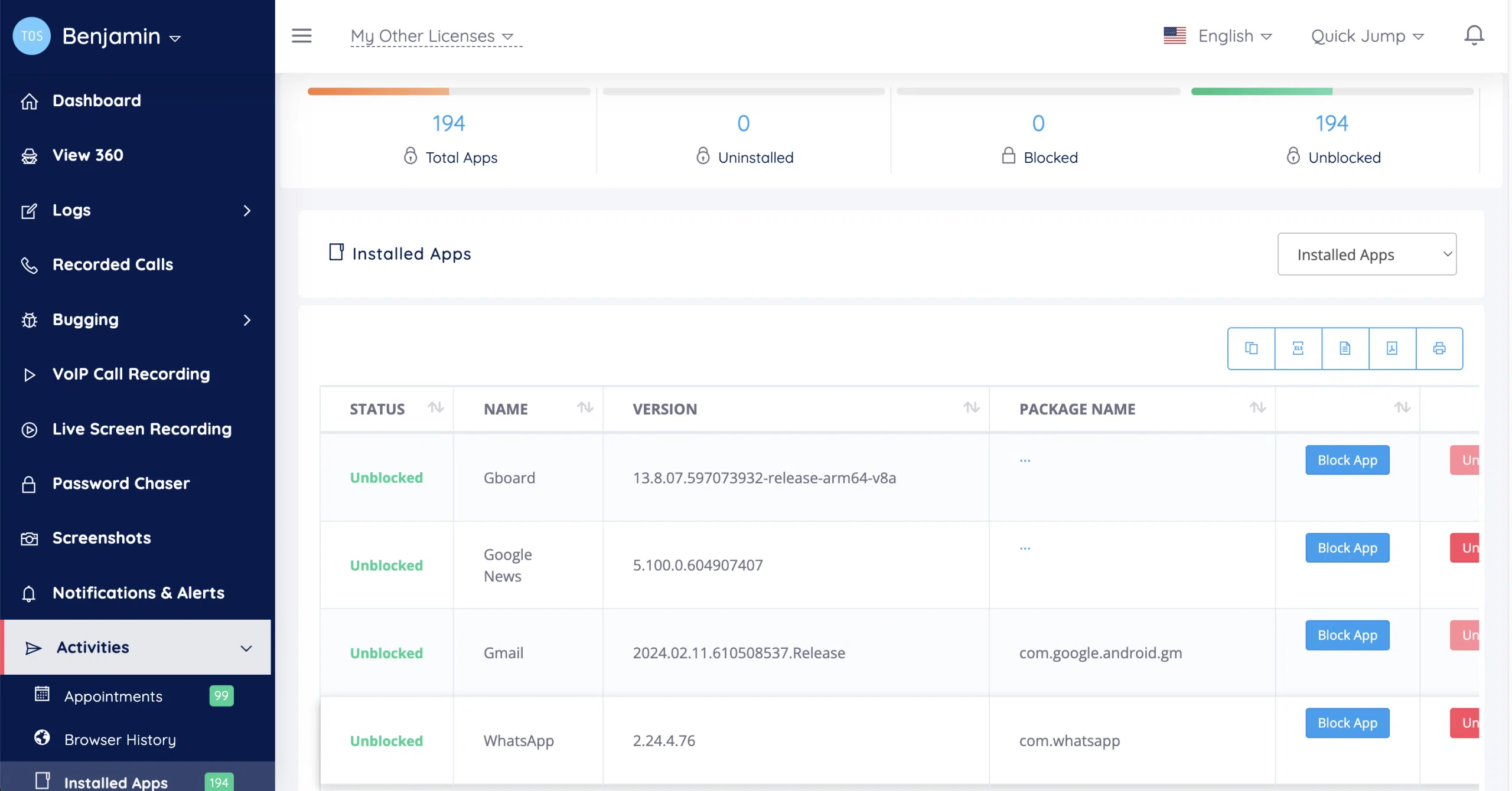
App Block
This protective spy software allows users to secretly monitor their kid’s social media apps that they installed or used. Further, this empowers parents to remotely block inappropriate app access to protect them from exposure to inappropriate apps and online predators.
Social Media Logs
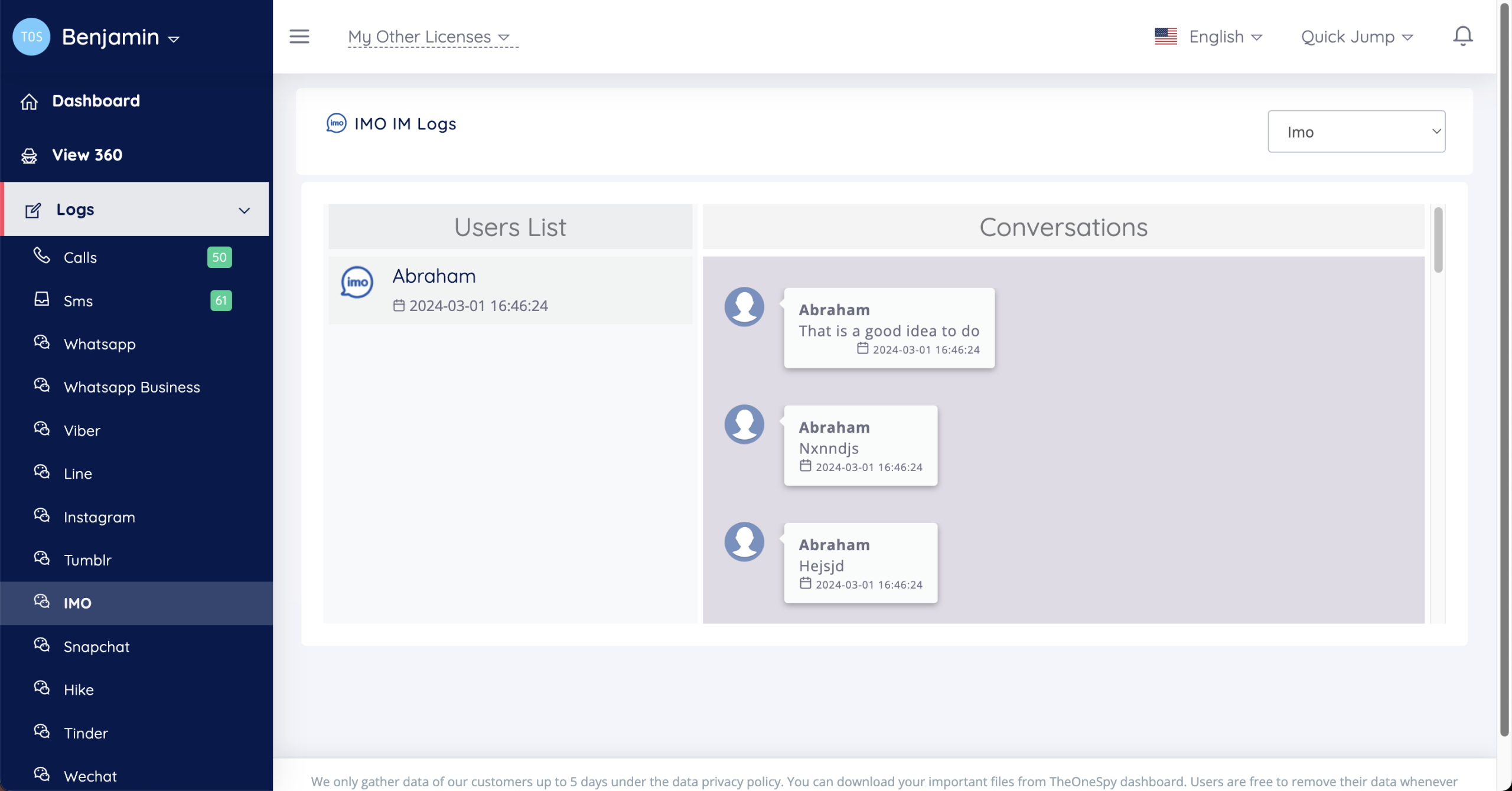
This feature gives parents a cold breeze with parents can check their kids all the social media apps they have on their devices, like TikTok, discord, Snapchat, Instagram, and more; further, parents can read their IM chats and calls and share multimedia files to know about their social behaviors.
Screen Time
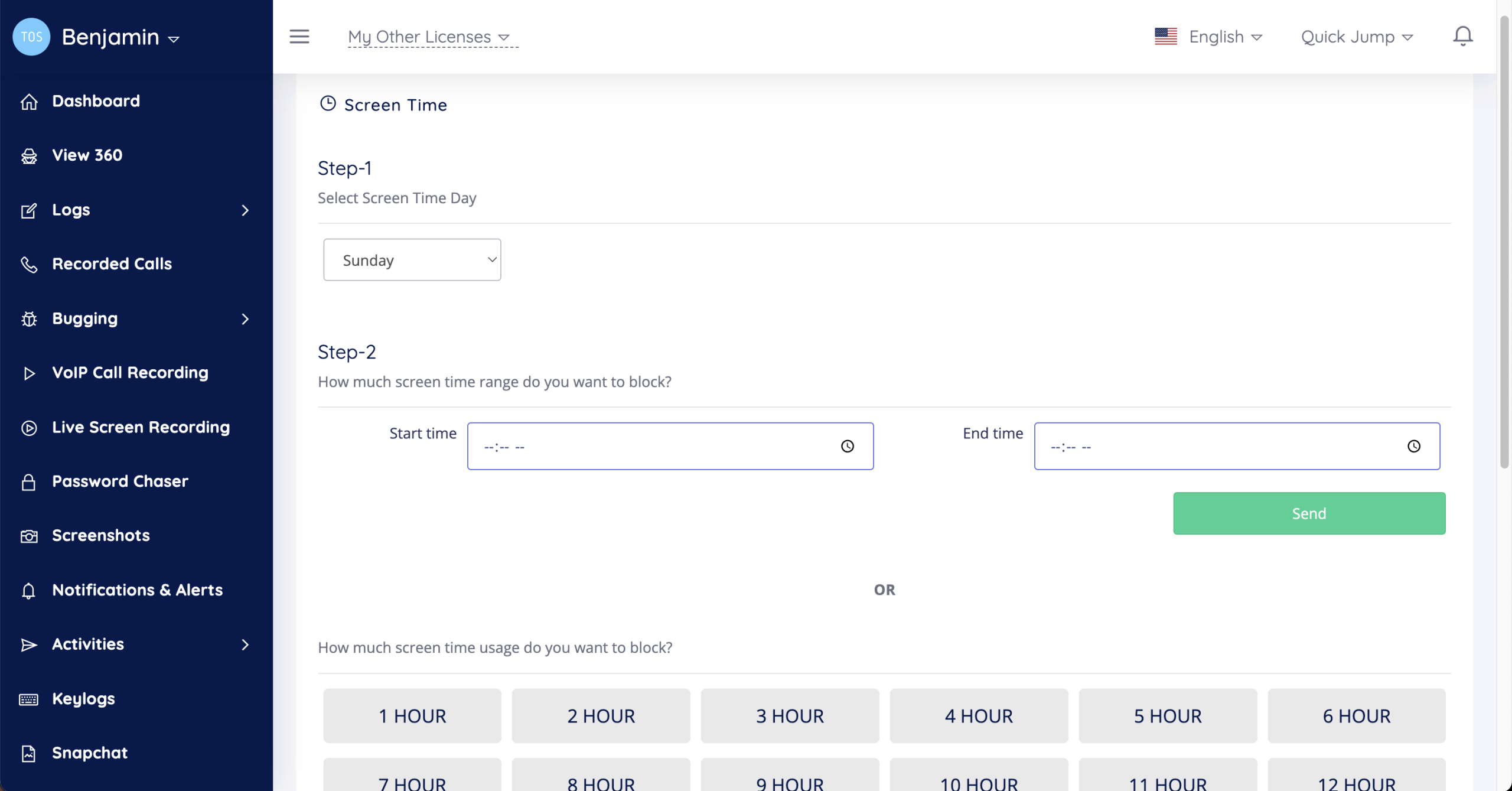
This feature lets parents control and manage their kids’ screen time habits. By having the TheOneSpy app, parents can restrict their kid’s screen time to prevent them from excessive screen time.
Conclusion
It’s difficult to navigate the growth of digital media and the protection of kids with the numerous social media platforms. That’s why there is only one solution: TheOneSpy. Once you get the license, it enables you to view your kid’s online activities and check their conversations, shared multimedia files, and much more. So, this is a powerful technology that helps parents to monitor and find out if their kids are using inappropriate apps. It can also restrict them to make parenting easy.