
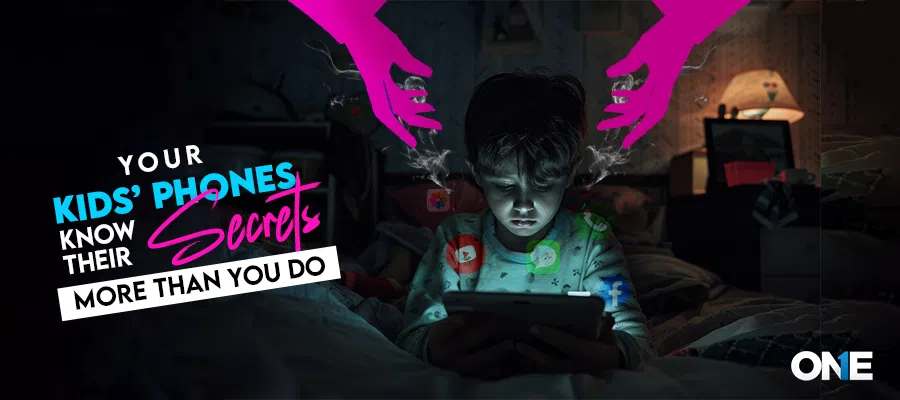
Are you even noticing how much time kids spend on their phones? Or do you have an idea of which apps are most frequently used on their cell phones? Might not be, right? But here’s the uncomfortable truth: your kids’ phones know their secrets more than you do. Every tap, search, message, and app interaction is quietly recorded. Even the things they don’t remember are still stored on their device’s servers.
Is this not a story? It’s a horrifying truth that becomes so real in 2026. The devices we keep in our pockets are not just smarter gadgets that move with our fingers. But they are capturing the habits, patterns, and sensitive information. And with children, all of this is happening behind the scenes in ways most parents can’t begin to imagine.
It’s not a question of pointing a finger at technology or dissing parents. It’s a question of understanding how kids use their phones these days—and why it matters now more than ever.
What Your Kids’ Phone Learns About Them Without Your Knowledg
Parents typically assume that cell phones collect information only when kids actively use apps. However, smartphones gather data about children even when they are not directly using the screen.
Every tap, scroll, swipe, or pause reveals behavioral patterns. Over time, a phone can distinguish boredom, stress, overstimulation, or emotional dependency based on app-related behavior. Late-night activity may indicate sleep problems. Frequent switching between apps can signal anxiety or restlessness. Long periods of inactivity followed by excessive use may point to severe mood swings. None of this requires a child to share private thoughts or create harmful content.
Instead, a child’s interactions are passively observed by the device. Smart devices collect sensitive data about kids’ information that can sometimes be helpful, but also carries serious risks if misused.
2026: Why a Major Turning Point in the Kids’ Cyberspace?
Aggregating data a few years ago was largely a data storage task. It is currently being actively utilized. Tech is growing fast, and it’s expected to continue to grow over the next few years. In the future, it will not only track people’s digital routines but also predict them. It will be able to determine which types of information will command one’s attention, which kinds of messages will impact mood, and at what point a person is emotionally vulnerable.
It is creating a serious difference for children. Children are still in a developmental phase, but their online activities are also subject to threats. “Normal phone use” can turn into long-term profiling without them even realizing it.
The scary part is that the information captured by the AI stays forever. These childhood behaviors are not erased from memory over time, either, because childhood habits can influence exposure long after that. “Kids are no longer just phone users—they’re data subjects.”
Parents’ Perceptions and Misconceptions, and What Phones Really Know
Often, parents feel like they know what is going on because things are out in the open. But phones have a way of seeing much more. A smartphone has the deepest information about individuals that does not pop up; it stays low, stays behind the screens, but records pauses, messages, scrolls, clicks, etc.
| Parents May Wonder: | Phones, on the other hand, can |
|---|---|
| They’re just gaming. | Your Kids’ Phones Know Their Secrets More Than You Do |
| They’re chatting with friends. | Emotional dependence on particular apps |
| They’re home; therefore, they are safe. | Daily Routines And Movement Routines |
| They spend a lot of time on one app—it must be normal. | Social Behavior Changes Before Parent Observation |
Screen time displays duration. Phones analyze behavior. That’s where, in between perceptions and misconceptions, the risk factor grows readily.
The Biggest Risk That Most Parents Completely Miss
The problem is not the time spent on the screen. The problem is the silent data collection taking place in the background.
There’s also third-party code on many kids’ apps collecting information beyond what parents think. Location services can remain on even if an app isn’t running. Microphone or sensor access can remain on long after an app is no longer in use. It’s also tracking movement data, not just location.
The parents are unlikely to review permissions on a regular basis. Even then, the reasons are confusing and misleading. By the time a problem is observable, the data is already gathered.
Why Screen Time Limits Are Insufficient On Their Own
Limiting everyone’s screen time seems like the responsible thing to do, and it’s very useful, but it’s not enough anymore. The child’s persistence with a particular app will not be clarified by the app’s or device’s time limits. The emotional dependence on the platform will not be addressed by restricting content.
In many instances, the damage has already begun before the parent needs to intervene. Moreover, nowadays, safety violations are not about kids breaking the rules; they are about checking their behavioral and daily patterns to understand what you might not see. Do not just focus on restricting them.
How does TheOneSpy Help Parents Understand Digital Dangers?
This is where everything the digital awareness tool provides becomes crucial. TheOneSpy was developed to help parents monitor the activities taking place on a child’s cell phone, not to pry or add fear. The objective is clarity. App and screen behavior, also referred to as screen.
Rather than emphasizing overall screen time, TheOneSpy focuses on how people actually use apps. Parents can determine which apps drive the most usage and when behavior patterns begin to resemble a problem. Uninstalling an app may be indicative of mood swings. Extended use of certain apps may hint at addiction. Such observations enable parents to spot issues early, before they become major problems.
Monitor Location & Daily Movement
Location tracking is more than just finding the child’s location. It is an understanding of their routine. TheOneSpy enables parents to monitor movement patterns and notifies them when actions deviate from them. TheOneSpy notifies when the kids move to the certain destinations, with timings, are detected, because a pattern ensures the safety of your kids outside the house and keeps them untangled, so they can stay wherever they go. It’s not about tracking, it’s about context.
Develop Communication Changes
Children do not always indicate if something is going wrong. However, there are usually changes in communication patterns before this. TheOneSpy points out sudden rises or falls in call and message counts, midnight communication patterns, and periods of silence. These indicators may show stress, isolation, or pressure from the outside world. The parents will have access to the information without the need to read the entire conversation.
App Permission and Know Hidden Activity
One of the most commonly neglected risks associated with applications on these smartphones or tablets is the number of app permissions they possess. “TheOneSpy can assist you in tracking which applications require unnecessary permissions or run secretly in the background.” This enables parents to intervene earlier—before the silent collection of data becomes extended exposure.
Why Does The Parental Monitoring App Feel Outdated Today?
The reason for parental controller apps is healthier device use. They put restrictions on screen time and block harmful sites. No doubts, these are the obvious features that should be part of every tracking app. But now the technology is evolving more substantially, and this world is where AI-driven methods are integrated into apps and sites. Every click, every move, every minute of your kids’ time spent on their cell phones, shuffling their preferences. The AI algorithm stores their preferences, like dislikes, on its servers and continues to provide information they might like without needing to search, even when they don’t.
When kids continue, it becomes a pattern and, after a time, a habit. The habits where the phone knows what to play next, that kids even like, and keeps revealing their secrets that their guardians even don’t know about. The worst part is that parents don’t realize the kids’ shifting intentions, behaviors, and the reasons behind them. We understand the importance of kids’ freedom. Still, parents need clear visibility into their children’s devices because they have the right to know everything, allowing them to take proper, informed actions that don’t stop at blocking or restricting. But to catch the flags before it starts!
Modern Parenting That Every Kid Deserves!
Good parenting never violates or hovers over the kids. But to promote kids to explore new ideas, create unique thoughts, and tackle things their own way. It is part of good parenting, and parents need to beware of the theft that comes with AI moderation. First, understand the engagement: the attractions that keep kids on screens for hours. Get a full understanding of AI-driven apps and start communicating with the child calmly. When they feel safe, they see your restriction as a fair option rather than pressure. Remember, kids now have more interest and knowledge in advanced interaction than you do. So, without being overcollected, you need to set the healer balance routines and teach them the dangers of the AI sites so they can follow them with love and understanding!
Final Words
Your kids’ devices are more than you think; they’re not just gadgets for conversing with friends, watching favorite shows, or playing games. It’s beyond that, collecting crucial information about your kids that you never noticed. In 2026, it’s not just a conviction story, but it’s become a horror reality now! Never did the attacks or damage appear loud or obvious; the spines are behind the screens, secretive, capturing and recording the routines. That’s where most parents panic, but instead of taking on the worries, they choose modern parenting techniques or a reliable monitoring tool such as TheOneSpy. With TheOneSpy, you can get deeper insight into what the cell phone recording and keeping secrets. TheOneSpy provokes confidence and safety with no fear of privacy issues. The main problem is not how kids use cell phones, but understanding how a smartphone can learn kids’ behaviors and patterns.