
In this ever-changing digital world, parenting will never be easier. Today’s youth face the newest form of challenges unlike the previous generations. From academic stress to social stress, anxiety, and the fear of bullying, everything is harder to be safe. Parents can do anything to ensure the safety of the minors in this ever-hustling digital world, and this is understandable. However, being overly concerned about the kids’ actions, parents find themselves overly involved in their kids’ online routines.
Observe your parenting style by answering the following questions. Do you remind your kid about every homework assignment? Do you solve all problems before your child makes any effort? Are you constantly checking in on your child’s whereabouts, even when they are physically safe? This type of concern shows love and affection. However, if you overly protect kids, then you might have the helicopter parenting tendencies.
In this post, we will discuss what helicopter parenting is and why parents are overly involved in their kids’ lives. Moreover, how it negatively impacts the kids’ upbringing and the steps to avoid if you find yourself being a helicopter parent. Plus, the healthier and balanced approach with tracking software such as TheOneSpy helps maintain your trust with the child.
According to the systematic review published in 2025, helicopter parenting causes constant anxiety and stress among students n the teenage group. Plus, research has found that kids who lack autonomy and self-confidence will struggle in relationships.
What Is Helicopter Parenting?
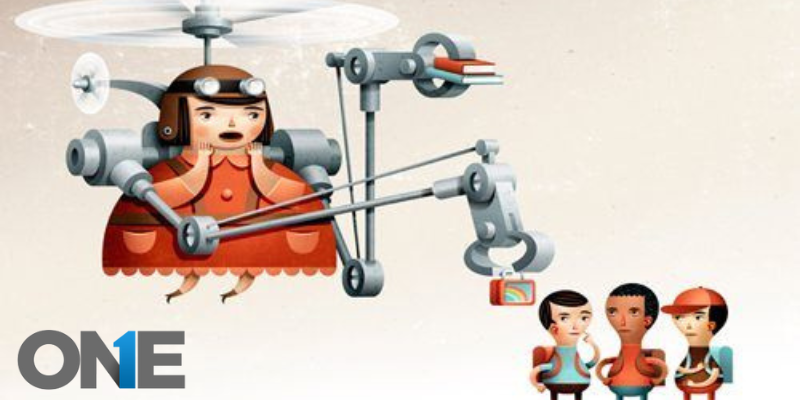
Helicopter parenting is a parenting style in which parents want to be involved in every aspect of their kids’ lives and prevent them from making mistakes. It can include the various challenges and other social threats. Helicopter parents are those who hover around the kids constantly, without thinking about what would happen if something goes wrong.
Unlike the supportive parents, helicopter parenting does not just rely on the advice and tips. These parenting styles do not encourage self-growth in the youth. They are constantly thinking about the child’s actions, the steps they take, whom they contact, and carefully monitoring every activity. Plus, remove obstacles they face in their online difficulties and help them instead of pushing them to do it freely.
For example, the mother or father can email the teacher regarding missing homework before giving the child a chance to explain everything. Or they can choose to resolve all conflicts between their kid’s friends instead of promoting effective communication. Constantly reminding older children about their responsibilities can also be a sign of this phenomenon.
It should be said that occasional assistance is far from being helicopter parenting. All children require approval. But the danger lies in the fact that intervention becomes a routine parenting practice, while promoting children’s independence and the gradual development of new skills is absent.
Parents should understand that their task is not the removal of difficulties but the provision of direction and the the necessary space for kids’ development.
According to psychologist Dr Ann Dunnewold, over-parenting is helicopter parenting characterised by over-controlling, over-protecting, and setting perfection standards. The point that has been overlooked is that this type of over-parenting is not always overt; in fact, many helicopter parents come across as caring and calm, while everything is controlled behind the scenes.
Signs That You Are a Helicopter Parent
Many parents think that being overinvolved is justified because their actions stem from the care and love for the children. But their actions sometimes offend kids because excessive interruptions make them anxious and think about why they don’t live independently. These signs help to recognize whether you’re overly involved in your child’s life.
Suppose you have already solved the complex issues before even kids try. Moreover, when you just remind them about their responsibilities but do not step forward to take action on their own, you are categorized as the helicopter parent. It is also characteristic of such parents to talk to teachers about minor issues, interfere in their children’s friendships, or control every aspect of their children’s lives without clear necessity.
For example, if your teen does not submit the assignments, you rush to the teacher, complain, and explain everything to her. Of course, you do it to help your son. But if you start doing it constantly, you may prevent the development of accountability and freedom.
The same way, if your child has some difficulties with friends, then you can decide to solve them instead of teaching them to communicate. You can constantly check his location, send messages asking about his whereabouts, or worry whenever you cannot see him immediately.
Your main motive is not to intrude on their private space. But the question you should ask yourself is: am I being an obstacle to their learning and exploration of prevention methods?
Reasons for Being Helicopter Parents
The reasons why people resort to helicopter parenting are generally love for children and the wish to keep them away from potential threats or difficulties. Parents want kids to be successful and happy in their fields. So they hover around them, leading to a lack of trust and autonomy.
Several factors cause such a parental approach:
Fear of Online threats
The fear of cybercrime, the internet usage, and negative online impacts urges parents to monitor their kids over the internet. The safety of the child is important. But leaving to explore individually and learn to roam around social networks appropriately.
Desire to Make Children Successful
Parents typically keep the eyes on the educational grades and ask about the plans. However, parental help is useful in some situations, but it is also necessary to leave the space for the kids to handle situations on their own.
Personal experiences that shaped parenting
Sometimes parents try to protect kids from something horrible in the past. The past attacks, bullying, harassment, etc., are genuine concerns that, when left unaddressed, lead kids to damage their digital presence and ability to handle different problems.
Social Media Influence
Social media creates the environment where parents have to compare their children with other kids,s and it results in increased parental involvement, although children develop differently.
Modern Technologies
Modern technologies allow parents to track their children wherever they go through the means of a smartphone, GPS tracker, or other supervision programs. They may be helpful occasionally, but in excess, they may deprive children of any sovereignty.
Cultural and Family Norms
In some cultures and families, the involvement of parents in all aspects of children’s lives is viewed as proper and normal. In a balanced way, it allows for raising independent children who are not afraid to speak up and do whatever is necessary.
Psychological Aspects of Helicopter Parenting
Helicopter parenting has an effect not only on children’s everyday lives but also on their perception of the world, ways of coping with the problems, and self-respect. Specialists in child development claim that, in addition to parental protection, children require opportunities to make their own decisions, solve problems, and gain experience.
Children Need Autonomy to Develop
When kids grow up, they need to take action on their own. Giving age-appropriate freedom gives them the chance to build self-confidence and improve decision-making the facing difficult challenges. But if parents perform all actions instead of children, the latter may be hesitant about their judgments.
Making Mistakes Is Important
Failure and setbacks play the significant role in the children’s upbringing. Monitoring problems like missing assignments and friends’ arguments helps improve the sense of responsibility and belief in how to respond in the deficit situations. Thus, children will know how to deal with more serious difficulties when they get older.
Actions achieve Self-assurance
Self-faith arises through the completion of tasks by children themselves and not when parents do them. Small responsibilities, like organizing school things or solving insignificant problems, help build self-reliance and self-confidence.
In one 2026 study, teenagers reported low mood when they felt their parents were excessively protective. In addition, the researchers noted that excessive parental protection could be responsible for diminished self-enthusiasm and emotion regulation.
How Does Helicopter Parenting Impact Children Depending on Their Age?
Instead of taking all the action into your own hands, encourage kids to gradually prepare to handle the hurdles. Therefore, parents should gradually incorporate more opportunities for children to experience autonomy and participate in the decision-making with their parents.
Kids 5-8 Years Old
The minors of this age group require close supervision to be able to establish routines and perform the necessary actions safely. It is fine to help the kids with some chores; however, giving the child an opportunity to choose clothes or school packs also fosters responsibility.
Pre-teens 9-12 Years Old
Pre-teens have increased liberation and can successfully handle various aspects of life, such as academic performance, peer relationships, and so forth. At this point, parents do not step in to solve the problem. Despite that, encourage kids to handle the issues on their own before going to ask for the help.
Adolescents 13-18 Years Old
At this stage, kids move beyond the teen phase and need independence to prepare for future circumstances and life. Overcontrolling and involvement in their actions foster a dependency on the parents and reduce the trust between parents and children.
Individual Development of Each Kid Matters
Kids develop individually, and parents should consider the individuality of each kid when developing the approach to interaction with him/her.
How Can You Shift From Helicopter Parenting To Gentle Parenting?
To avoid being the helicopter parents, hovering around the teens 24/7. Mutual guidance is necessary: one has to be gentle, loving, and caring, but strict when needed, while the other needs to help and educate on the meaning of self-awareness.
One should let the child deal with small age-appropriate issues without always solving everything for them. One leaves kids in the situation and observes how the decision-making develops their confidence and willpower.
Experiencing failure is a crucial part of the kids’ brain development. The unimaginable situations help us grow and gain more experience. Not everywhere with your kids, so step back and let the kids do whatever they want to prevent them from getting hurt. Furthermore, the success is not praiseworthy every time; sometimes, the persistence and the achievement are praiseworthy, but the ways they find to achieve the goals, whether they make it or not.
In the phase of growing, let kids ask the question: how do you manage things if you’re caught in that particular situation? Give them freedom, not worries, and their mood instantly shifts toward responsibility and maturity as they learn on their own.
Helicopter Parenting vs. Healthy Parenting
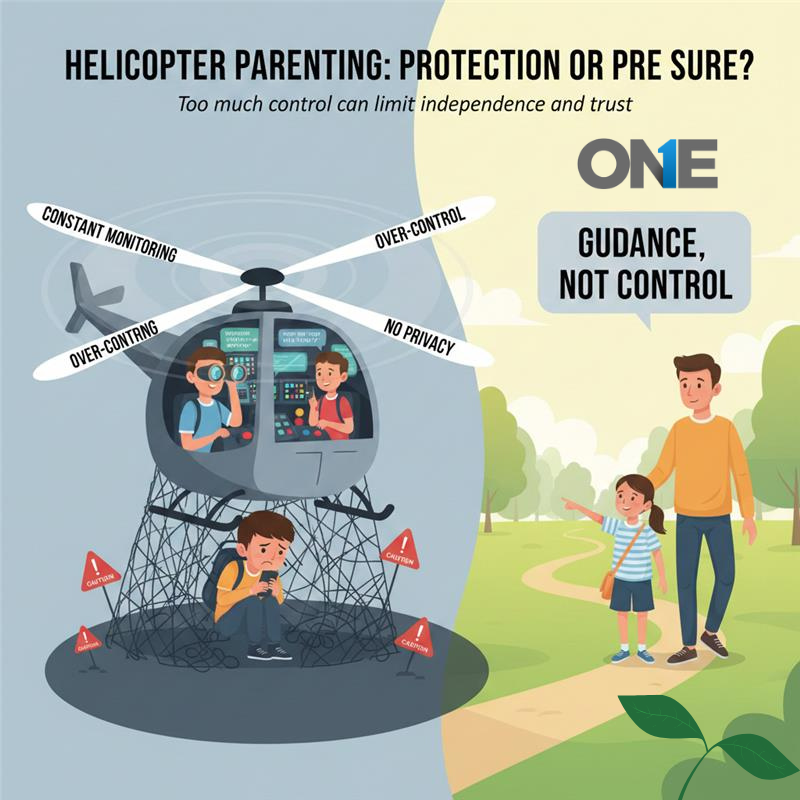
Although both parents want the best for the kids and share their love and care, the only difference is the approaches they use for the upbringing. While helicopter parents solve their kids’ problems and do everything for their children, authoritative parents help children find solutions and develop independent thinking.
| Helicopter Parents | Healthy Parents |
|---|---|
| Solves the child’s problems | Guides children to find solutions by themselves |
| Monitors the child’s everyday activities | allows age-appropriate independence |
| Attempts to prevent mistakes | takes mistakes as a chance to learn |
| Uses constant supervision | Guidance and communication build trust |
None of the parents is consistent in their approach. However, it is equally essential to give the love and care, and to do so once too. That’s where healthy kids grow, who, amidst the steps they take, independently solve all the complex tasks.
Smart Way To Guide Kids Without Being Overly Hovering?
Parenting needs balance and support to protect kids from being overly intrusive in their personal environment. The goal is to create an environment where kids are fully aware of what’s right and wrong and, through decision-making, choose and handle tasks self-sufficiently.
However, this does not mean that children should be left to tackle every problem on their own. Rather, parents can step in when advice is needed, teaching children how to handle stress and difficulties. Communication helps children feel that their parents are not controlling them but are there to advise and assist.
With the help of modern monitoring applications such as TheOneSpy, parents can be made aware of their child’s activities without choking them. This will enable parents to shield, direct, and aid their children without becoming helicopter parents.
- Make decisions that their children can make on their own.
- Step in quickly to prevent mistakes or failure
- Take care of academic, daily, and social activities.
- Struggle to let children face challenges independently.
- Although the point is to protect and help the child succeed, it could come across as if the child is not capable of handling things on their own.
When is digital monitoring the key to modern parenting?
Today, the parents only want their kids’ safety in the social apps that are filled with social crimes and threats. But technology is the part of life that keeps families united. That’s where the monitoring tools come in that provide location sharing, parental control, and app management for the parents. So they do not need to be overly curious or hover around the children. With those methods, parents ensure the safety of the youths because most of their time is spent the screens.
The usage of these tools does not make you a helicopter parent automatically. It depends on whether your motivation lies in helping your child become a mature and independent person or in controlling his/her life.
However, there is only one thing a parent needs to ask him-/herself:
Am I using technology to protect my child? Am I doing it because I cannot let go of them?
Use A Parental Control App Without Hovering Physically Over Your Kids.
Do you want to set parental controls on your kids and avoid being a Helicopter parent? You can do it with TheOneSpy Parental app. You can install the app after subscribing and get credentials via email. Further, get physical access to the target device and set up our parental monitoring solution on kids’ cellphones. Log in to the web control panel and enable features to monitor every activity of kids on their phones and in their surroundings.
TheOneSpy Top Parental Control Features
Here are the features that allow parents to stay updated about their kids and prevent them from being Helicopter parents:
View360 Live Streaming (Exclusive Feature)
It helps parents to gain a real-time 360-degree picture of their kid’s surroundings via the View360 Live Streaming feature by TheOneSpy. However, it can add context in situations of real concern and must be used ethically to ensure the safety of children.
Ambient Sound Recording
The Ambient Sound Recording feature enables parents to record audio from the surroundings of their kids when they have safety issues related to bullying and emergencies. It ensures the extra security of the children while making sure that responsible monitoring is done.
Live Screen Recording
It is a feature that lets parents record live short videos on their kid’s cellphone screen. Further, send the videos to the dashboard. Users can download the videos from the dashboard and see what their kids are doing on their cell phone screens. Users can see social media, web browsing, and other activities to safeguard kids online.
Live Camera Streaming
You can remotely control kids’ cell phone cameras and get a live stream of the kids’ surroundings. Assist parents in keeping track of where the kids are and what they are doing. Parents can see the whereabouts and activities and listen to the actions by switching cameras with audio.
Call Recording
Allow families to record and listen to the live phone calls of their kids on any cell phone device. A call recorder is the best tool for parents to listen to the calls of strangers and the people they plan to meet for hookups.
Keylogging
Keystroke logging allows parents to set parental controls and record keystrokes for chats, messages, passwords, and emails. It also enables parents to decode the sneaky texting messages of teens online.
GPS Location Tracking
Families who secretly track the GPS location of their kids. So, you can see the location history and set a Geo-fence to prevent kids from visiting the dangerous places in the city, and pinpoint the locations.
Screen Time
Enable parents to prevent kids from using dating apps, sugar daddy apps, and other explicit apps. TheOneSpy screen-time feature empowers you to block every inappropriate app on your phone remotely.
Note: Technologies never take the place of gentle, open communication with trust. So when you adopt the external monitoring software, you should first keep in mind that the tools you choose should comply with legal policies. Plus, the consent of the kids is necessary to keep a close eye on the activities without getting into conflict.
Conclusion
Parenthood does not always involve control or limits; instead, it prompts taking every step independently. You give them space with balance to resolve the issues with their thinking abilities. Foster the confidence and build a responsible social citizen.
During the growing phase, kids need autonomy to make decisions, learn from the past mistakes, and understand that they have their parents’ support whenever they need it. With the use of digital parenting solutions ethically, they can complement the efforts of parents and healthy communication.