If you’ve heard your teenager mention a “finsta” — or found a second Instagram account under a name that isn’t quite theirs — you’ve run into one of the most common features of teenage social media life. A finsta is a fake, or second, Instagram account, usually private and shared only with a small circle of close friends. This guide explains what finstas actually are, why teens create them, the genuine risks worth knowing about, and how to handle it as a parent — without either panicking or pretending it isn’t happening.
The honest starting point, because a lot of coverage gets this wrong: a finsta is not inherently a sign of trouble. For most teens it’s a fairly ordinary privacy behaviour — the digital equivalent of a diary shared with a few friends. The risks are real and worth understanding, but the right response is rarely alarm. It’s conversation.
What Is a Finsta?
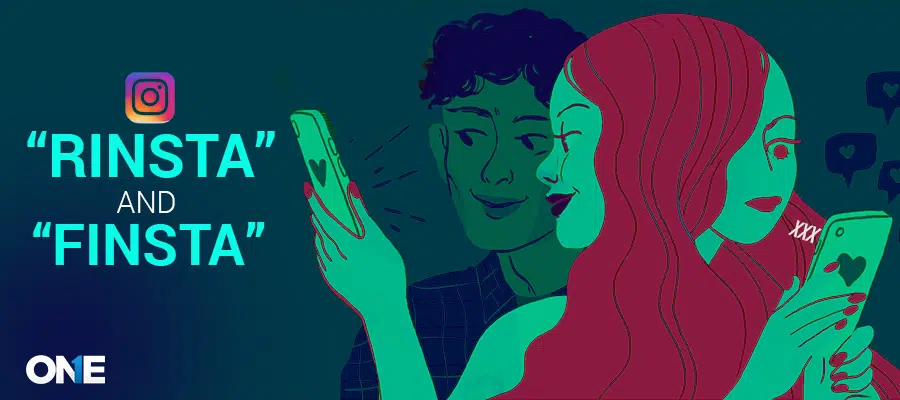
“Finsta” is short for “fake Instagram.” It’s a secondary account a teenager keeps alongside their main one — which, by contrast, they’ll sometimes call their “rinsta,” or “real Instagram.” The two serve different purposes:
- The rinsta is the polished, public-facing account — the curated highlights, the photos they’re happy for a wide audience, including family and future employers, to see.
- The finsta is the smaller, private, more casual account — usually under a pseudonym, followed by a handful of trusted friends, where they post unfiltered, silly, mundane or more personal things they don’t want on their main profile.
Finstas are also sometimes called “spam accounts.” They’re often set to private, with a username and profile picture chosen specifically so they’re hard to connect to the teen’s real identity — which is exactly why a parent can have no idea one exists.
Why Do Teens Create Finstas?
Understanding the motivation matters, because it shapes how you respond. Most reasons are ordinary and even healthy:
- Escape from the pressure of the “perfect” feed. The main Instagram account is performance — the right photo, the right caption, the right image. A finsta is where a teen can be unpolished and real with people who won’t judge them.
- Privacy from a wide audience. As parents, relatives, teachers and eventually colleges and employers follow their main account, teens want a space that isn’t on display to all of them.
- Connection with close friends. Inside jokes, memes, rants about their day, unflattering selfies — the small stuff they only want a trusted few to see.
Research bears out how common this is. The National Cybersecurity Alliance found that around 60% of teens have created online accounts their parents don’t know about — more than double the roughly 28% of parents who suspect it. A finsta, in other words, is closer to the norm than the exception, and its existence alone doesn’t mean something is wrong.
The Risks Worth Knowing About
None of that means finstas are risk-free. The same privacy that makes them appealing is also what creates the concerns:
A space with no oversight
Because a finsta is hidden from parents and set to a small audience, teens can feel free to post things they wouldn’t publicly — which sometimes means riskier content, or content that shows poor judgement. The absence of any adult in the room is the whole point for the teen, and the whole concern for the parent.
The false sense of privacy
This is the single most important thing for a teenager to understand: a “private” account is not actually private. Anyone among their followers can screenshot a post and share it anywhere. A finsta feels like a sealed room, but nothing posted online can be reliably kept in it, and nothing is ever truly deleted. Content meant for five friends can end up in front of the whole school.
Cyberbullying, in both directions
The semi-anonymity of a finsta can lower inhibitions. That can make it a place where bullying happens — where a teen might say things about others they’d never say publicly — and equally a place where they’re targeted, away from where an adult might notice.
Contact from people they don’t know
Where a finsta is used to connect beyond a close friend group, the usual risks of any social account apply — including unwanted contact from strangers, which is harder for a parent to spot on an account they don’t know exists.
How to Handle It as a Parent
The instinct on discovering a hidden account is often alarm, or a demand for passwords. Both tend to backfire — they confirm to the teen that secrecy was necessary, and push the behaviour further out of sight. A calmer approach works better.
Start from curiosity, not accusation
If you find or learn about a finsta, the productive opening is to ask why they wanted it, not to treat it as a betrayal. For most teens the honest answer — “I didn’t want everyone seeing everything” — is reasonable, and taking it seriously keeps them talking to you.
Make the privacy point the centrepiece
The most useful thing you can teach is that no account is truly private. Screenshots exist, friend groups change, and a post shared with five people can travel. A teen who genuinely absorbs that thinks differently about what they put on any account, finsta included.
Agree some ground rules together
Whether a finsta is acceptable is a family-by-family decision. If you allow one, a conversation about what’s safe to share, who should be allowed to follow, and never posting anything they wouldn’t want seen widely is far more protective than a ban — which usually just relocates the account somewhere you can’t find it.
Keep the conversation open
The through-line, as with everything in teenage digital life, is that a child who feels able to come to you when something goes wrong is safer than one managing it alone in secret. That relationship protects them more than any rule.
Where Monitoring Fits
For most families this is a matter of conversation and trust rather than software. Where a monitoring tool can help is visibility a worried parent may otherwise lack — an awareness of the accounts and apps in use, which can surface a problem a teen hasn’t mentioned. As everywhere on this site, that works best used openly: a teen who knows a tool is in place, and why, keeps the trust that makes the whole relationship work. Used behind their back and later discovered, it does exactly what you were trying to prevent — it teaches them to hide better. If you’re weighing options, our parental control comparison lays them out. Treat any tool as a support for the conversation above, not a replacement for it.
Frequently Asked Questions
What is a finsta?
A finsta (“fake Instagram”) is a secondary Instagram account, usually private and under a pseudonym, that a teen keeps alongside their main account for casual, unfiltered posts shared with a small group of close friends. Their main, public account is sometimes called a “rinsta” (“real Instagram”). Having one isn’t inherently a problem — it’s a common way teens carve out a lower-pressure, more private space online.
Why do teenagers have finstas?
Mostly to escape the pressure of maintaining a “perfect” public feed and to have a private space with close friends away from parents, relatives and future employers who follow their main account. It’s where they post the silly, mundane or more personal things they don’t want widely seen. Research suggests around 60% of teens have accounts their parents don’t know about, so it’s closer to normal teen behaviour than a warning sign in itself.
Are finstas dangerous?
Not inherently, but they carry real risks: because they’re hidden and feel private, teens may post riskier content, and the semi-anonymity can enable cyberbullying in both directions. The biggest issue is the false sense of privacy — a “private” account isn’t truly private, since any follower can screenshot and share posts. The risks are best managed through conversation about privacy and judgement rather than through a ban.
How do I find my child’s finsta?
It can be difficult, because finstas use pseudonyms and hide identifying details by design. Rather than turning it into a hunt, the more productive route is usually to ask openly — and to explain you’re asking out of concern for their safety, not to police them. A teen who trusts your reaction is more likely to be honest than one who feels caught, and that openness protects them more than finding the account ever could.
Should I let my teenager have a finsta?
That’s a family decision, and it depends on your child’s age, maturity and your ground rules for technology. Many parents allow one alongside a clear conversation about safe sharing, who can follow, and the reality that nothing online is truly private. An outright ban often just pushes the account somewhere you can’t see it, so an agreed, open arrangement is usually more protective than a prohibition.
Sources
- Merriam-Webster — definition and origin of “finsta”
- National Cybersecurity Alliance — research on teen accounts hidden from parents
- Instagram — Parent Resources — supervision tools and privacy settings
- Pew Research Center — Teens, Social Media and Technology